Merck and Moderna report phase 3 cancer vaccine data early after leak
INTerpath-001 showed 24-month recurrence-free survival of 82.2% with the vaccine plus Keytruda versus 70.0% for Keytruda alone, but distant metastasis-free survival was weaker than phase 2 and Moderna shares dropped.
, updated . 2-minute read.
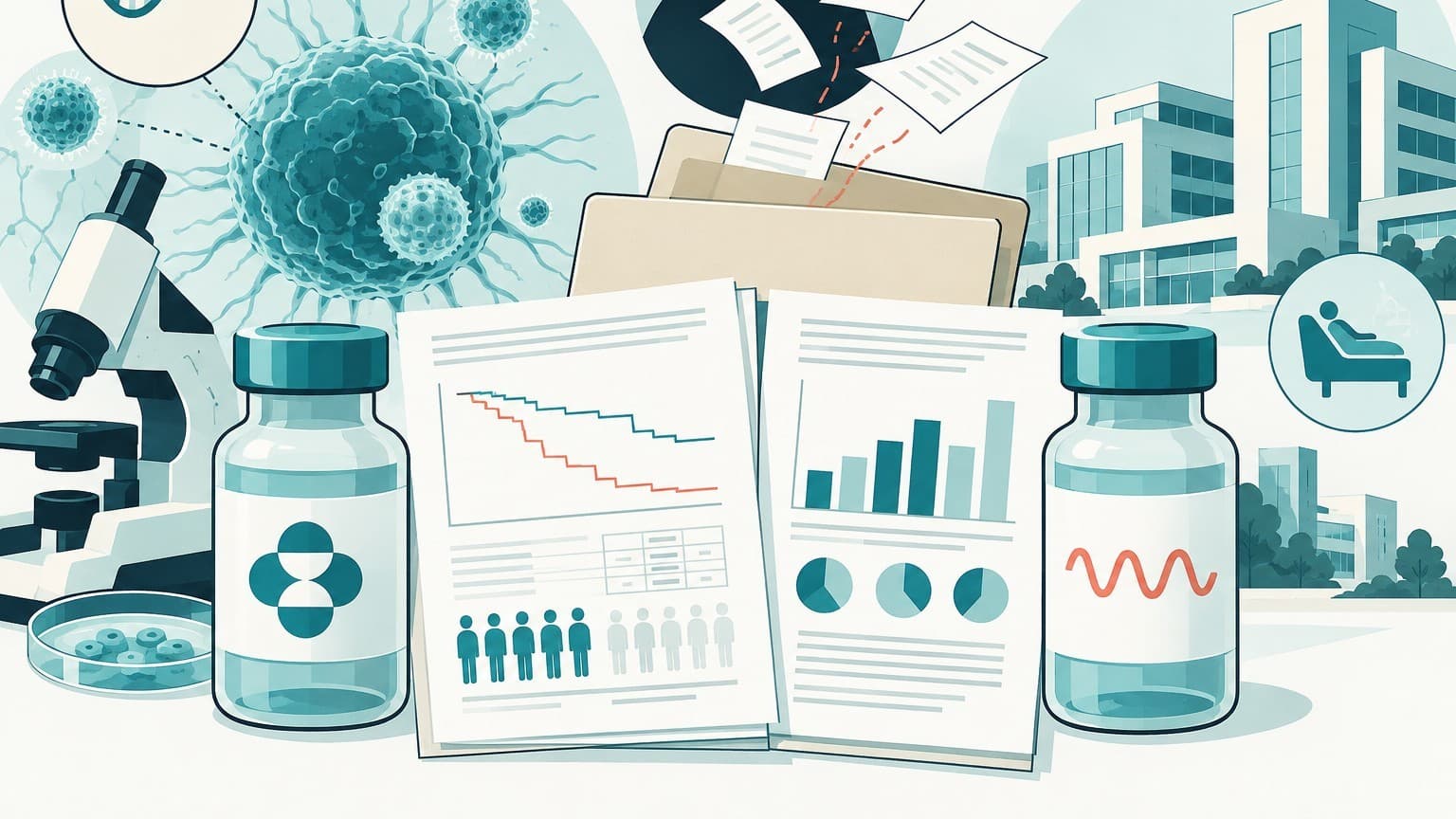
Merck & Co. and Moderna published full phase 3 results for intismeran autogene plus pembrolizumab (Keytruda) on Thursday, moving ahead of the planned ESMO presentation in Madrid because an embargo had been broken. The primary endpoint of INTerpath-001 was recurrence-free survival in high-risk melanoma. The companies had announced in August that the trial met that endpoint without giving numbers, and Moderna shares advanced after that news. Fierce Biotech reported that a cancer news site had disclosed part of the data early, and the Chosun Ilbo named the site as Oncology Central.
The trial enrolled 1,137 patients with high-risk melanoma, Scientific American reported. After a median follow-up of about two years, the 24-month recurrence-free survival rate was 82.2% in the intismeran autogene plus Keytruda group, compared with 70.0% in the Keytruda alone group, Merck and Moderna said. The hazard ratio was 0.58, which means a 42 percent lower risk of recurrence or death.
In distant metastasis-free survival, the 24-month rate was 88.5% for the combination and 80.2% for Keytruda alone, for a hazard ratio of 0.62 and a 38 percent lower risk of distant metastasis or death. Fierce Biotech noted that this looked weaker than the vaccine's phase 2 outcomes: the phase 2 primary analysis showed a 65 percent lower risk of distant metastasis or death, and the five-year analysis showed a 59 percent lower risk. Fierce Biotech also reported that some analysts and key opinion leaders had projected a hazard ratio as low as 0.5, and Moderna executives said hazard ratios in the 0.5 to 0.8 range could still be clinically meaningful depending on the overall data; a physician cited the same range in a Guggenheim Securities note. The same physician said cutting the risk of developing metastases by roughly 10 percentage points would be seen as quite compelling by most oncologists.
Across the trial, 95.8 percent of participants on the combination had treatment-related adverse events, compared with 90.0 percent on Keytruda alone; grade 3 to 5 events occurred in 14.2 percent and 13.4 percent, respectively. The companies said they saw no new safety signals.
Following the early release, Moderna shares fell as much as 26% intraday on October 22, the largest intraday decline in the company's history, and Merck shares temporarily fell 3.9%, the Chosun Ilbo reported. Fierce Biotech described Merck's decline as modest and Moderna's as considerably sharper.
Karen Knudsen, CEO of the Parker Institute for Cancer Immunotherapy, described the findings as "really encouraging" but said overall survival data are not yet available. Michael Postow, a Memorial Sloan Kettering Cancer Center melanoma specialist who helped run the trial, said on a press call that the "big advance" is that fewer patients will have to face melanoma coming back. The partners said the New England Journal of Medicine has accepted the results for publication, and they are in discussions with regulators about seeking approval for the vaccine.
Update, October 24, 2026
WIRED reported additional details from the INTerpath-001 release. Georgina Long, the study's principal investigator and medical director of the Australian Melanoma Institute, called the results "transformative" and said they "have the potential to make a foundational shift in how we treat patients with earlier-stage melanoma". The report put the average follow-up at 24.6 months. The vaccine was made from each patient's tumor sample; researchers selected up to three mutation-derived molecular signatures per patient. Mild side effects included fever, fatigue, and injection-site pain, which had also appeared in earlier trials. Moderna CEO Stéphane Bancel said the results "reinforce our conviction that mRNA has the potential to fundamentally change how we treat cancer". The companies stressed that the vaccine is intended to reduce recurrence and death after prior treatment, not to prevent melanoma, and remains investigational pending regulatory approval. Eva Muñoz Couselo, a Vall d'Hebron Institute of Oncology researcher not involved in the study, said it is the first Phase III trial to show an individualized therapeutic vaccine can significantly improve conventional immunotherapy outcomes. Marisol Soengas of Spain's National Cancer Research Center said scaling up bespoke vaccines is logistically complex and affordability is a challenge.
Update, October 25, 2026
Il Sole 24 ORE reported that the INTerpath-001 population included patients with stage II–IV melanoma. The newspaper described the vaccine as encoding up to 34 neoantigens. According to Michele Del Vecchio, the study's lead recruiter and head of melanoma medical oncology at Milan's IRCCS National Cancer Institute Foundation, tumor tissue is sent to Moderna laboratories in the United States, where DNA is analyzed to identify mutations that generate abnormal proteins, or neoantigens, creating a molecular identity card unique to each patient. A personalized vaccine containing synthetic mRNA for those neoantigens is then sent back to the patient's treatment center to train T lymphocytes to recognize and attack cells bearing the targets.
Sources
- ESMO: After leak, Merck and Moderna post phase 3 cancer vaccine data early, Fierce Biotech
- Here’s what the new Merck-Moderna mRNA cancer vaccine data actually show, Scientific American
- Moderna Shares Drop 26% After Lower-Than-Expected Cancer Vaccine Data, 조선일보
- New mRNA Vaccine Reduces Risk of Melanoma Recurrence by Over 40 Percent, WIRED
- Melanoma: the personalised vaccine works – a potential breakthrough in treatment (costs permitting), Il Sole 24 ORE
Corrections. Report an error to corrections@clinicalobserver.com. Read our corrections policy.