FDA approves Lembaz to extend survival in infantile-onset Niemann-Pick type C
In three studies and an expanded access program, 36 treated patients had a median survival of 8.5 years versus 4.9 years for matched controls, a 55% reduction in the risk of death.
. 1-minute read.
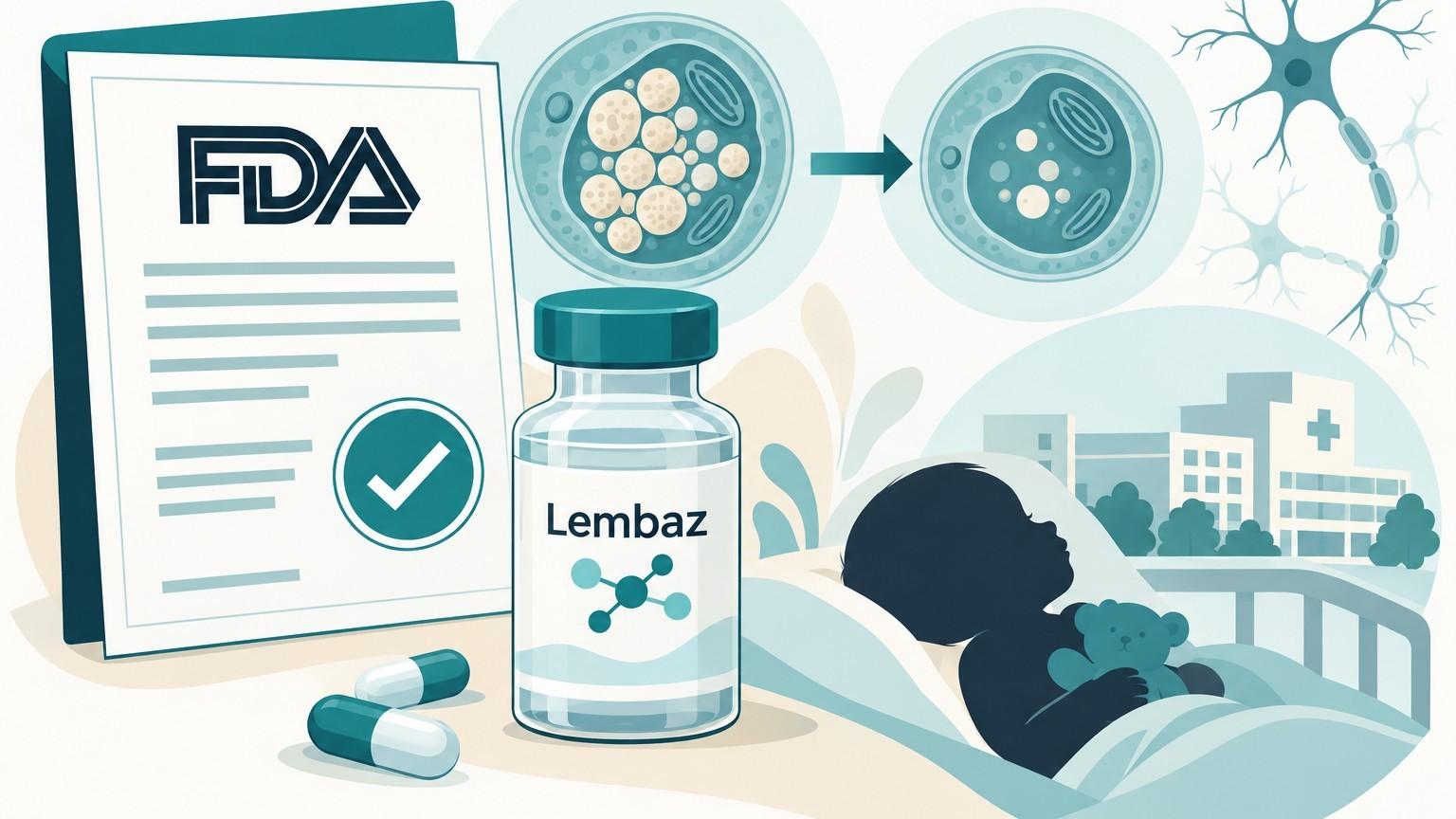
The U.S. Food and Drug Administration approved Lembaz (adrabetadex) injection on November 17, 2026, the agency announced. The approval covers adults and children with infantile-onset Niemann-Pick disease type C, defined by neurological symptoms beginning before age 6, with a minimum weight of 7 kilograms, or roughly 15 pounds.
Acting FDA Commissioner Kyle Diamantas said the approval “marks an important milestone” for families, adding that “for the first time, there is a treatment shown to help adults and children with this serious disease live longer”.
Niemann-Pick disease type C is a rare inherited lysosomal storage disorder estimated to affect 1 in 150,000 people. In NPC, the body fails to process cholesterol and other fats correctly within cells, so they build up, especially in the brain, causing progressive decline in movement, coordination, and swallowing ability. Previously, two treatments were approved for NPC, but neither was proven to lower mortality, and plus both have age and weight limits that restrict their use in the youngest and most severely affected patients. Lembaz is given by a trained healthcare provider as an intrathecal injection every two weeks.
The FDA reviewed survival data from 36 patients who were treated in three clinical studies or an expanded access program, and all had neurological symptoms that started before age 6. Treated patients had longer overall survival, with a 55% reduction in risk of death and a median survival of 8.5 years versus 4.9 years in the control group. The survival advantage persisted regardless of whether patients also received miglustat, which is used off-label for NPC.
The drug has a boxed warning about hearing impairment, which can be permanent. A hearing evaluation should be performed before starting treatment and regularly throughout, with dose adjustments based on results. Common side effects include hearing problems, balance and coordination issues, tiredness, throwing up, back pain, headache, fever, loose stools, queasiness, and cough. Lembaz received Breakthrough Therapy designation, and the FDA approved it for Mandos, LLC, a Beren Therapeutics, PBC subsidiary.
Sources: FDA
Corrections. Report an error to corrections@clinicalobserver.com. Read our corrections policy.