NIH study links PFAS exposure to ER-negative breast cancer
Women with the highest blood levels of PFOA or PFOS had 67% and 93% higher rates of estrogen receptor-negative tumors, though no link was seen for breast cancer overall.
. 2-minute read.
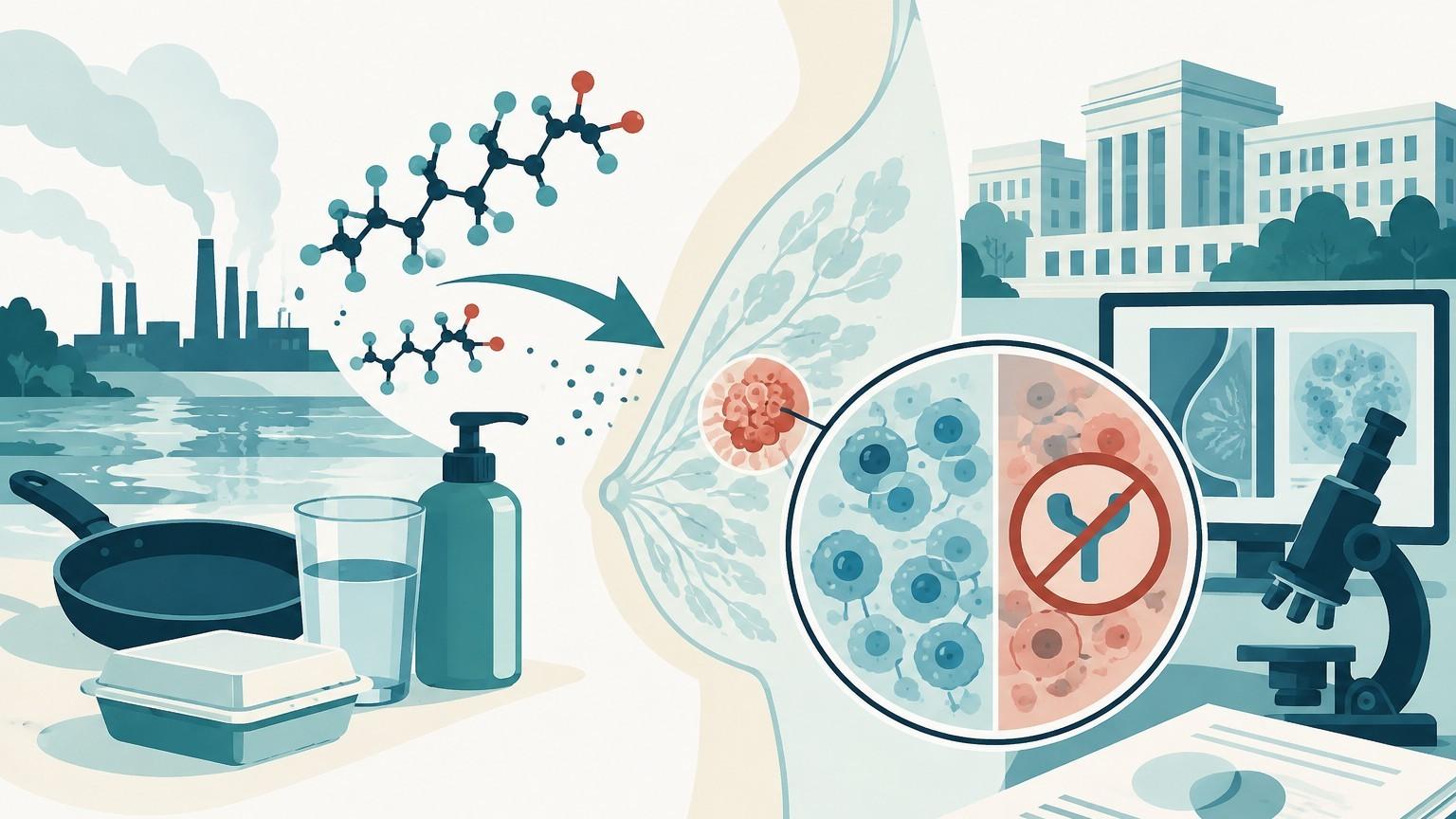
Researchers used stored blood samples from the Sister Study, an NIH cohort, to compare 1,609 women who later received a breast cancer diagnosis with 2,269 women who did not. Because the blood samples were collected before diagnosis, the measurements came before the cancer outcome. The analysis, published in the Journal of Clinical Oncology, focused on two legacy PFAS compounds, PFOA and PFOS, and found no overall relationship between these chemicals and breast cancer risk.
Women whose PFOA concentrations were in the highest group had a 67 percent higher rate of estrogen receptor-negative tumors than those in the lowest group. For PFOS, the top group had a 93 percent higher rate.
Because ER-negative tumors grow independently of estrogen, they are not treated with drugs that block estrogen, such as tamoxifen or aromatase inhibitors. These tumors tend to be more aggressive, offer fewer treatment options, and carry poorer long-term survival than hormone-receptor-positive tumors. Standard hormone-blocking therapies are ineffective for this tumor type.
Pinpointing environmental factors behind ER-negative breast cancer has been difficult because inherited risk is the main known driver. Tiffany Troso-Sandoval, an oncologist who treats breast and gynecologic cancers, said PFAS collect in tissues and "can actually increase the risk of carcinogenic transformation of cells". Troso-Sandoval said the compounds may damage DNA or reduce the immune system's ability to clear early cancer cells.
PFOA and PFOS are often labeled forever chemicals because their carbon-fluorine bonds break down very slowly. For decades they appeared in nonstick pans, waterproof clothing, food wrappers and firefighting foam; although they have been mostly phased out in the United States and Europe, they persist in contaminated water and soil.
HHS Secretary Robert F. Kennedy Jr. said women need clear data about how environmental contaminants affect long-term health and urged continued scrutiny of chemical safety standards. However, researchers and other experts stress that the findings show a statistical link, not causation, and the blood samples measured older PFAS compounds that are already banned. These compounds are long-lived in human tissues.
Alexandra White, the study leader and an NIH researcher, noted that manufacturers have replaced PFOA and PFOS with shorter-chain PFAS variants intended to break down more quickly. Their long-term biological effects and possible influence on cancer risk remain largely unknown, leaving the safety of current substitutes uncertain.
The study cannot establish that PFAS exposure causes ER-negative breast cancer, and it provides no evidence about the newer short-chain PFAS compounds now in use.
Sources: streamlinefeed.co.ke
Corrections. Report an error to corrections@clinicalobserver.com. Read our corrections policy.