US measles cases near 6,000 as Wisconsin reports 181 new infections
The CDC recorded 426 new infections last week, the largest one-week jump in decades, and state health departments have now reported 11 measles-related deaths.
. 3-minute read.
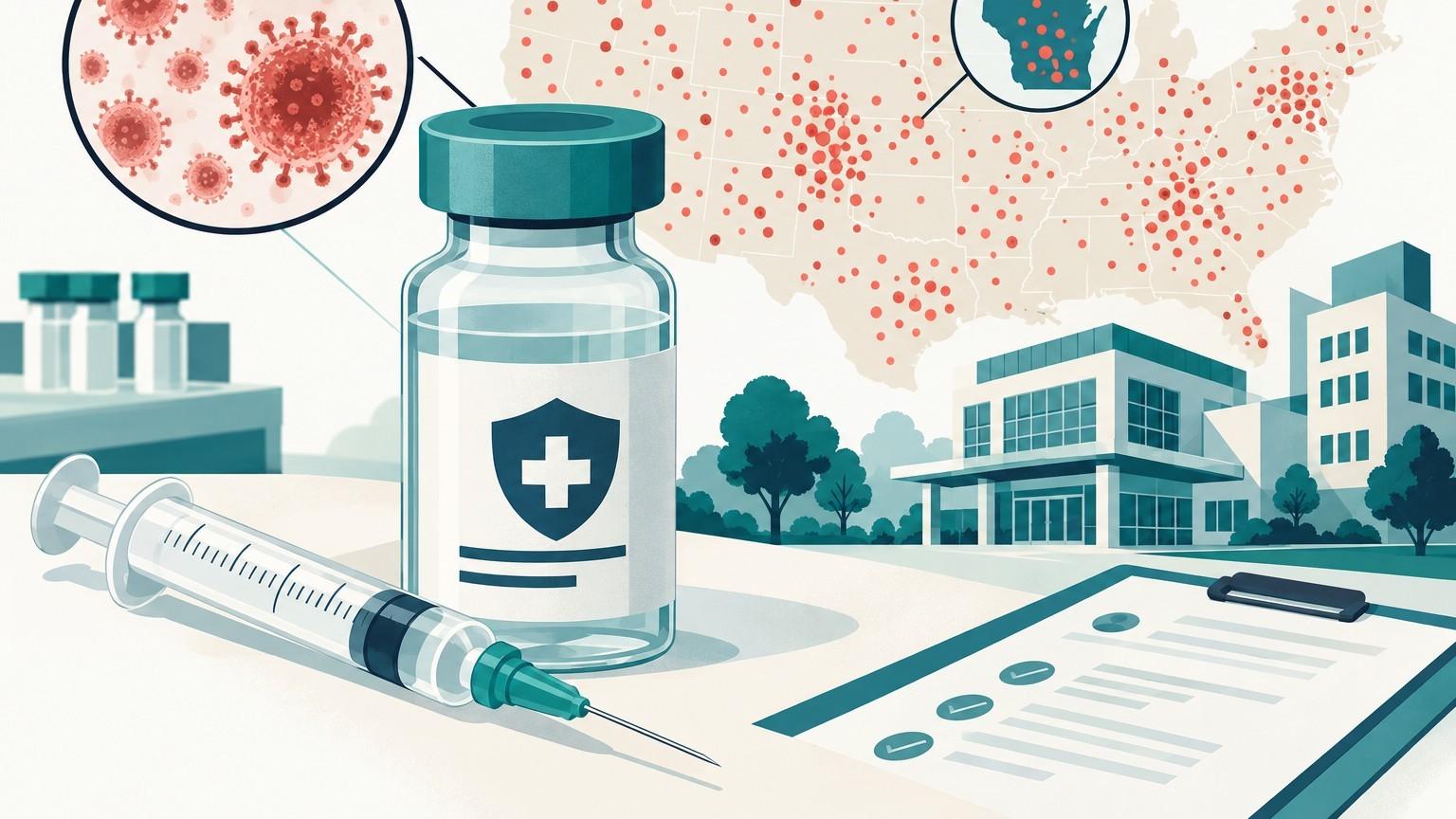
In its latest weekly report, the CDC recorded 426 new measles infections, the biggest one-week rise in decades, Medical Xpress reported Monday, taking the 2026 national total to 5,838 cases. The increase marked the 15th straight week of triple-digit growth in the U.S. total.
The 2026 count makes this the worst year for measles in the United States since the early 1990s, according to the NBC News tracker. So far this year, 43 measles outbreaks have been reported, and childhood vaccination rates have fallen, leaving communities at risk. Nearly six in ten patients are children or teenagers, and 96% of cases are in people who are unvaccinated or whose vaccination status is unknown. Two doses of the vaccine prevent infection in 97% of people who receive them.
Wisconsin remains a leading hot spot. The state health department added 181 cases this week, raising its 2026 total to 832. Most infections involve unvaccinated people and are clustered inside "very closed communities," said Jonathan Temte, who is associate dean emeritus at the University of Wisconsin's medical and public health school, during a Brown University Pandemic Center webinar. Among those are Amish and Old Order Mennonite "Plain communities," Temte said. "A lot of these communities aren't opposed to vaccines, but they just traditionally are not vaccinated," he said. The state health department advises that infants as young as six months receive an early measles dose when their family or community is at risk of exposure.
Pennsylvania has reported 1,631 cases this year, with 97 new infections this week. Eight of the 11 U.S. measles-related deaths reported by states are in Pennsylvania; the most recent was an unvaccinated Clinton County resident reported this week. Wisconsin has also reported two child deaths this year, and Clinical Observer reported on Nov. 13 that the second was a child in Grant County. Pennsylvania's definition covers a death within 30 days of symptom onset when the person had clinical evidence of infection and a positive test, and the cause was not unrelated, Clinical Observer reported in November.
The CDC has acknowledged six measles-related deaths for the year. The CDC is working with the Council of State and Territorial Epidemiologists to create a standard definition for measles deaths, a process that could take time. The federal count has lagged state announcements because the CDC uses mortality data from the National Center for Health Statistics rather than state counts. The Pan American Health Organization concluded this month that the U.S. no longer meets the standard for measles elimination.
Other states are seeing outbreaks grow. Minnesota added 43 new cases this week, raising its 2026 total to 203, with most infections in Todd County's Amish community. Indiana reported 227 cases, up 56 from the previous week, with the largest outbreak in La Grange County. Michigan's total is 37, and CDC data show kindergarten measles vaccination coverage of 90.9% for the 2025-26 school year, below the 95% threshold for community immunity.
The U.S. surge is part of a wider global rise. Bangladesh has recorded 1,352 measles deaths and 256,586 suspected cases since mid-March, with 1,162 new suspected cases and nine more child deaths in the latest 24 hours, Nature World News reported Monday. Most reported deaths are suspected rather than laboratory-confirmed, and roughly 80% of cases have occurred in children younger than 5. An analysis in Emerging Infectious Diseases identified a backlog of children who had not been vaccinated as a main driver, and a separate peer-reviewed commentary said disruptions to vaccine supply and services in 2024 and 2025 may have contributed.
Sources: Medical Xpress, NBC News, Nature World News, Clinical Observer (1, 2)
Corrections. Report an error to corrections@clinicalobserver.com. Read our corrections policy.