Retatrutide and amylin combos move toward regulatory decisions
Lilly's triple-agonist retatrutide posted 20.8% weight loss in a phase 3 diabetes trial, while amylin-GLP-1 combinations CagriSema and EloraTZP await FDA steps and further testing.
. 3-minute read.
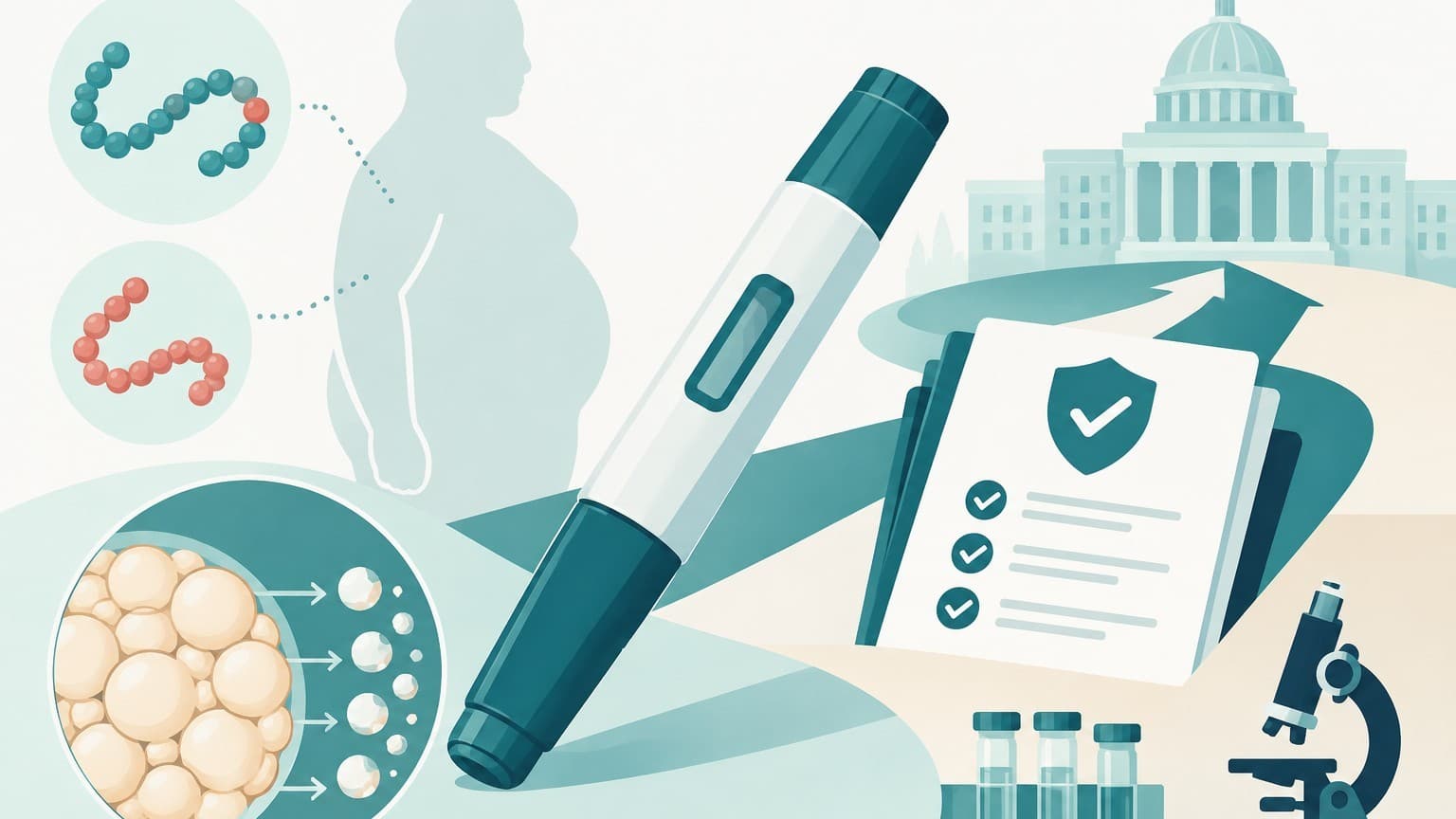
By mid-October 2026, the next generation of GLP-1-based obesity therapies has reached different stages. Lilly expects to ask the FDA to approve retatrutide in the first quarter of 2027, and Novo Nordisk has already filed CagriSema with an FDA decision expected by the end of the year. Behind these, Lilly's EloraTZP will enter phase 3 in the fourth quarter, and Zealand Pharma's petrelintide has not yet been submitted to regulators. Lilly said it will seek approval for retatrutide as a biologic, a category with 12 years of exclusivity in the US.
How the data arrived
The U.S. Department of Veterans Affairs said it would test a GLP-1 medicine in 600 veterans with alcohol use disorder. VA Secretary Doug Collins described the trial on Fox & Friends; the medication was originally developed by the department's research team, and the study aims to see whether it suppresses urges and appetite. This trial extends GLP-1 research beyond diabetes and obesity.
On 29 September 2026, The Lancet published TRIUMPH-2, a phase 3 double-blind, placebo-controlled trial of retatrutide in 1,152 adults with type 2 diabetes and obesity or overweight. After 80 weeks, the 12 mg weekly injection produced an average 20.8% weight reduction, or 49.6 lb. The 9 mg dose led to 19.1% (45.4 lb) and the 4 mg dose to 12.7% (29.8 lb). Among participants with a starting BMI of at least 35, the 12 mg dose produced 23.4% average loss, or 60.8 lb. HbA1c fell by 1.5 percentage points on the 12 mg dose, 1.6 on 9 mg, and 1.4 on 4 mg; up to 40% of participants reached a normal HbA1c below 5.7%. Common side effects included diarrhea, nausea, constipation, decreased appetite and vomiting. The trial also found reductions in cardiovascular risk markers: at the highest dose, triglycerides fell 39.5%, non-HDL cholesterol 19.6%, systolic blood pressure 10.8 mmHg, waist circumference 16.9 cm, and high-sensitivity C-reactive protein 58.3%. Researchers cautioned that these were changes in risk factors, not proof of fewer cardiovascular events. A separate trial of almost 2,000 people with severe obesity and existing cardiovascular disease found no significant difference in cardiovascular events between retatrutide and placebo.
On 30 September 2026, at the EASD congress in Milan, Lilly presented phase 2b results for EloraTZP, a fixed combination of the amylin analogue eloralintide and tirzepatide, the active ingredient in Zepbound. The study enrolled 367 people who were obese or overweight and also had type 2 diabetes. At 48 weeks, the highest combination dose led to an average 23.3% weight loss, versus 14.8% with tirzepatide by itself and 3% with placebo. A1C declined by 2.9 percentage points on the highest combination dose, compared with 2.4 on 15 mg Zepbound and 0.3 on placebo. Discontinuations because of adverse events ranged from 10.8% to 27% across combination groups, against 2.9% for tirzepatide alone and 16.7% for placebo. Ken Custer, Lilly's president of Cardio Metabolic Health, said the 48-week design and simultaneous escalation of two drugs made tolerability hard to assess, and that phase 3 will use a longer study and optimized uptitration. Novo Nordisk and Zealand Pharma presented amylin data at the same Milan meeting.
Where the pipeline stands
A Women's Health report gathered clinician views on retatrutide. Doctors described the safety profile so far as resembling other GLP-1 medicines, with gastrointestinal symptoms most common and no unexpected safety signal. They said the rapid weight loss warrants attention to muscle loss, bone density and gallbladder health. Phase 2 studies showed heart-rate increases that peaked around week 24 then subsided, and some phase 3 participants reported mild to moderate altered skin sensation. Retatrutide is not approved in the UK; the Medicines and Healthcare products Regulatory Agency states it is in clinical development.
On 13 October 2026, Quartz reported that petrelintide, a standalone amylin analogue from Zealand Pharma, produced about 10% average weight loss with side-effect rates close to placebo. Combinations such as CagriSema and EloraTZP have produced the largest trial weight losses, while CagriSema is closest to approval; Novo has filed it and expects an FDA decision by year-end. Lilly plans more EloraTZP studies this year, and petrelintide has not been submitted. Quartz noted that dropout rates have become as important as weight-loss percentages in trial reporting.
Sources
- VA tests GLP-1 weight loss drug for veterans with alcohol use disorder, Fox News
- Superior weight loss, blood sugar control propel Lilly’s amylin-GIP/GLP-1 combo into Phase 3, BioSpace
- Triple-Action Weight-Loss Drug Shows Promise for Heart Health, European Medical Journal
- Lilly's retatrutide GLP-1 delivers average weight loss of 50 pounds, USA TODAY
- Retatrutide promises a new wave of weight loss – but doctors say these risks need a closer look, Women's Health
- Next-generation weight-loss drugs now entering trials, qz.com
Corrections. Report an error to corrections@clinicalobserver.com. Read our corrections policy.