Stopping statins noninferior to continuation in older adults without CVD
A randomized 1,880-person trial found a two-week difference in event-free survival at two years, but 12.7% of those who stopped and 9.2% who continued had a cardiovascular event or death.
. 1-minute read.
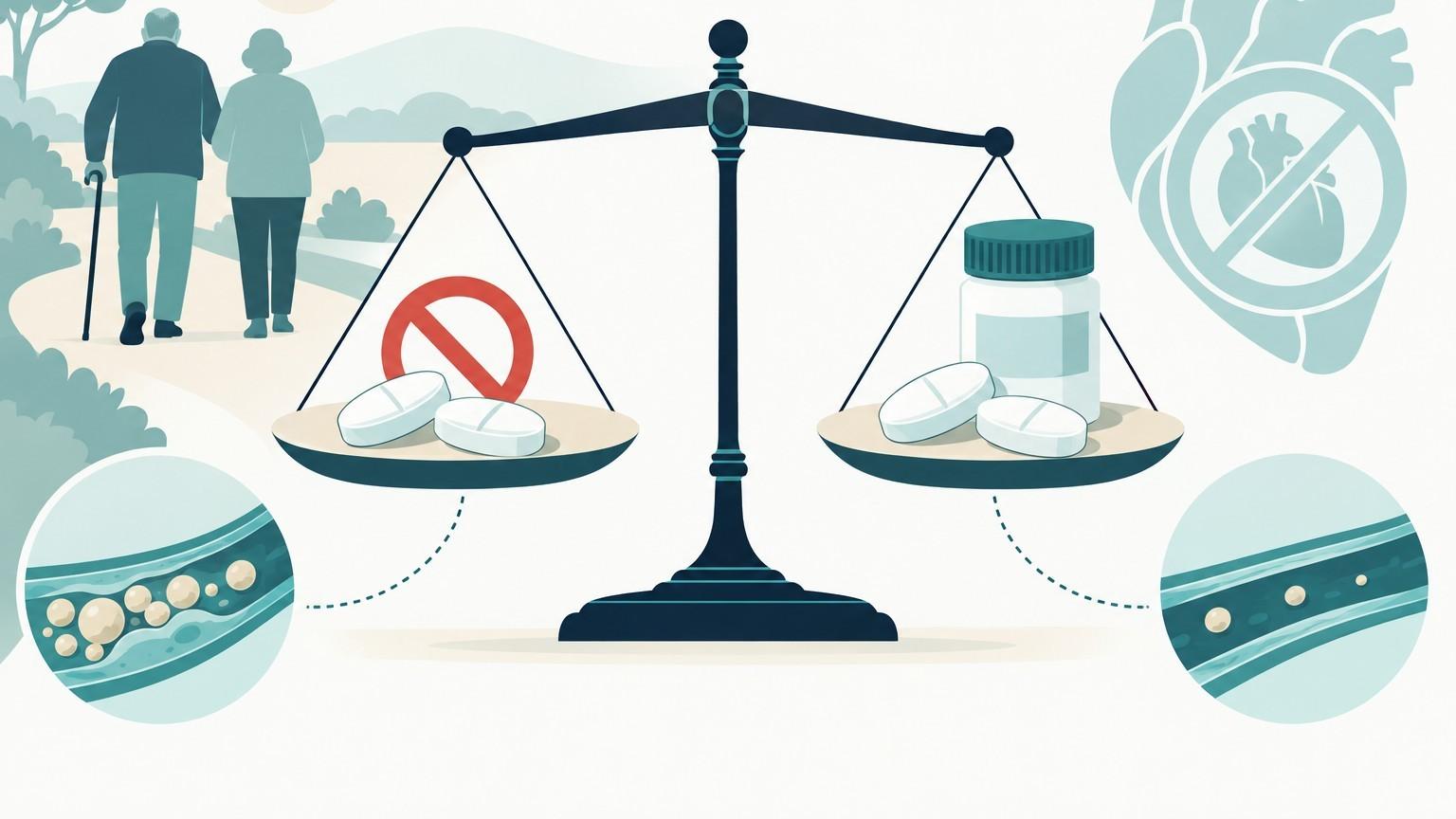
A randomized trial found that stopping statins for primary prevention was no worse than continuing them in adults aged 70 and older with at least two chronic conditions and no known cardiovascular disease, Medical Xpress reported. The New England Journal of Medicine published the findings online November 7 to coincide with the American Heart Association Scientific Sessions 2026 in Chicago.
Researchers led by Nicolas Rodondi of the University of Bern randomly assigned 1,880 participants either to stop or to continue statin and other lipid-lowering therapy. All were aged 70 years or older, had at least two chronic conditions, and had no known cardiovascular disease. The trial measured time to a first cardiovascular event, a composite of death from any cause, nonfatal myocardial infarction, or nonfatal ischemic stroke.
At two years, the between-group difference in restricted mean event-free survival time was −2.0 weeks. The noninferiority test yielded P < 0.001. During a median follow-up of 103 weeks, the composite endpoint occurred in 12.7 percent of those who stopped statins and 9.2 percent of those who continued, an absolute difference of 3.5 percentage points. Serious adverse events were reported in 43.0 percent of the discontinuation group and 39.8 percent of the continuation group.
In a statement, co-author Rita F. Redberg of the University of California, San Francisco, said, "This small, increased risk of cardiovascular events means that one cannot make a general recommendation about stopping statins in this patient population. There should be shared decision-making between the patient and the health care professional to know if it is appropriate for an individual to discontinue the medication. In general, however, discontinuation is safe for most people who are in this age group and without a previous cardiovascular disease event".
The trial does not establish that discontinuation is safe for every patient. Redberg said the findings do not support a general recommendation and that shared decision-making is needed.
Sources: Medical Xpress
Corrections. Report an error to corrections@clinicalobserver.com. Read our corrections policy.