Congo Ebola outbreak remains uncontrolled after six months
The deadliest of Congo's 17 outbreaks has spread to eight provinces, and experts say containment could take more than a year.
, updated . 3-minute read.
Containment gaps and funding
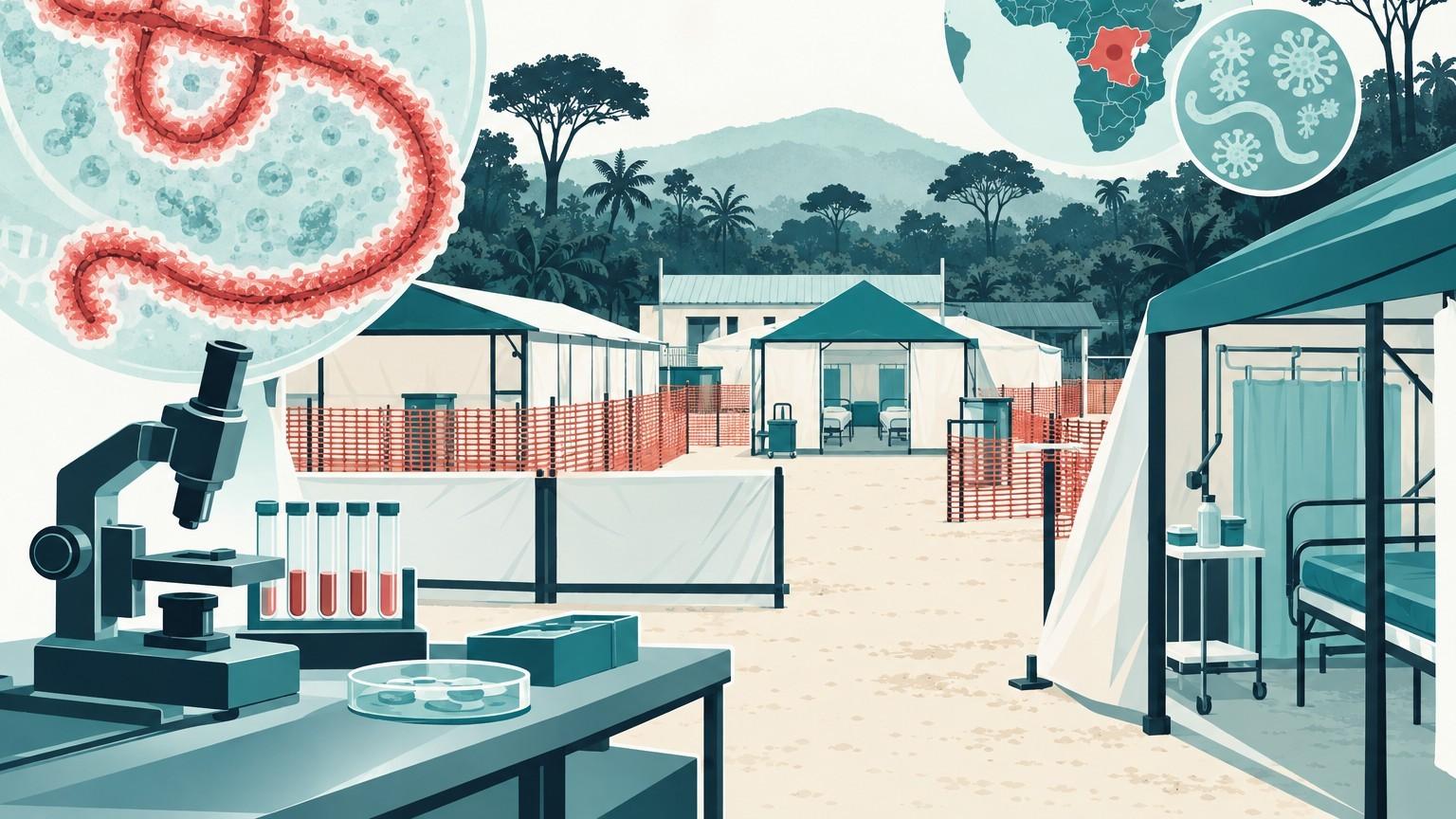
The Ebola outbreak in the Democratic Republic of the Congo remains out of control six months after it was declared, with more than 11,000 cases recorded and nearly half of those infected dead, Medical Xpress reported on Sunday, citing government data. It is the deadliest of the country's 17 outbreaks and is on track to surpass the 11,000 deaths in the 2014–2016 West African epidemic. Experts doubt the outbreak can be brought under control within the next year, and basic containment measures such as contact tracing and isolation remain inadequate. The virus has spread to eight of the country's 26 provinces.
The Africa Centers for Disease Control and Prevention says that 80% of new cases are detected outside health surveillance, so authorities have not tracked most infections, ABC News reported. One-third of deaths occur at home or in the community, where burials often happen without specialist supervision. Health workers have gone on strike multiple times because their pay is months late, sometimes leaving confirmed patients untreated. Last month, the Africa CDC voiced concern about more than $700 million in Ebola aid that cannot be accounted for. MSF said there is "a troubling disconnect between the considerable resources mobilised for the response and what is actually reaching patients, frontline workers and communities."
Children and violence
UNICEF reports that children made up 35% of deaths recorded through Nov. 4, and children under 5 accounted for 21% of all deaths. Almost 72% of infected children in that age group have died.
The outbreak is concentrated in eastern Congo, especially Ituri and North Kivu, where communities are dealing with the epidemic and armed conflict at the same time. Health workers have been attacked, some fatally, and health facilities have also come under attack. Confirmed cases have appeared in Nigeria, Kenya and Uganda, making this the most geographically widespread Ebola outbreak ever recorded.
Response and vaccine trial
Doctors Without Borders said in an update that its response includes infection prevention and control, water, sanitation, and hygiene, community engagement, and disease surveillance. At the Elikiya Ebola treatment center in Ituri, its laboratory processes an average of 40 samples each day and returns results in as little as one hour, compared with two to three days before. Teams operate treatment centers across five eastern provinces, including a 65-bed centre in Mongbwalu and a 40-bed centre in Munigi that is on standby.
The outbreak has been driven by Bundibugyo virus, an uncommon type first seen in Uganda in 2007. Clinical Observer reported on November 3 that as of Monday 5,376 people had died, with the Democratic Republic of the Congo accounting for 5,372 of those deaths. There is no licensed vaccine or approved targeted antiviral for this strain, and many rapid tests are designed for the more common Zaire strain. The World Health Organization declared a public health emergency of international concern two days after the country confirmed the outbreak on May 15.
A Phase 2/3 vaccine trial opened in Bunia, Ituri province, in late October, Clinical Observer reported on October 27. The first injections used Ervebo, which is licensed for the Zaire Ebola virus; it is not known whether it protects against Bundibugyo. Candidates from Moderna and from Oxford University with the Serum Institute of India are also expected to be added. Updated paediatric figures from WHO and Africa CDC data count 2,705 confirmed cases in children 17 or younger, including 1,345 under age 5. Save the Children reports that 72% of under-fives have died.
Update, November 15, 2026
UN senior Ebola coordinator Julien Harneis said Friday the outbreak is "growing exponentially" and now covers an area larger than France, with half of the 2,500 deaths recorded in the past 20 days, Deutsche Welle reported. The WHO announced it will immediately send the Democratic Republic of the Congo 70,000 doses of Merck’s Ervebo vaccine: 20,000 doses for a Phase 3 clinical trial of the shot against the Bundibugyo virus and 50,000 for frontline and health workers. The agency said early animal trial data suggest the vaccine may offer some protection against Bundibugyo, the strain driving the epidemic.
Sources: Medical Xpress, ABC News, doctorswithoutborders.org, Clinical Observer (1, 2), Deutsche Welle
Corrections. Report an error to corrections@clinicalobserver.com. Read our corrections policy.