Ebola outbreak kills more than 5,300 people, Africa CDC says
Confirmed cases reached 10,444 and the fatality rate topped 50 percent, with the Democratic Republic of the Congo recording 5,372 of 5,376 deaths.
. 2-minute read.
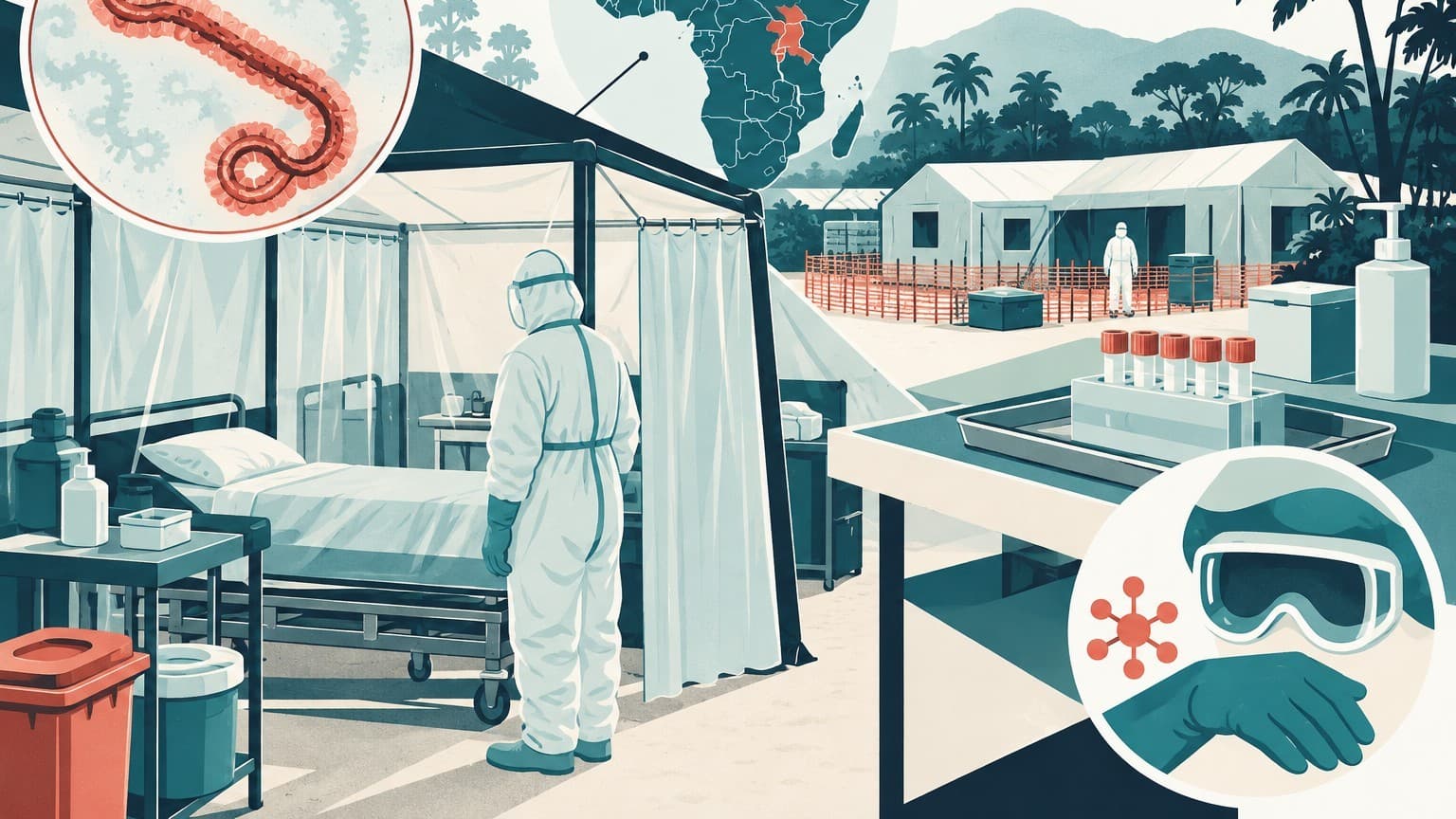
The latest Ebola outbreak in Central Africa had killed 5,376 people as of Monday, according to figures the Africa Centres for Disease Control and Prevention (Africa CDC) provided to AFP. The Democratic Republic of the Congo (DRC) accounts for 5,372 of those deaths; Kenya and Uganda have each recorded two. The Africa CDC data also show 10,444 confirmed cases and a fatality rate above 50 percent.
The DRC's Ministry of Health confirmed the outbreak on May 15, 2026, after undetected spread in Ituri province since late April. The World Health Organization designated it a public health emergency of international concern two days afterwards. The outbreak is the DRC's 17th since Ebola emerged in 1976 and is the deadliest on record there. By mid-August, the DRC had confirmed 4,945 cases and 2,325 deaths; neighbouring Uganda had 20 cases and two deaths.
The outbreak is driven by Bundibugyo virus, an uncommon type of Ebola first seen in Uganda in 2007. No licensed vaccine or approved targeted antiviral exists for this strain, and many rapid diagnostic tools were designed for the more common Zaire strain, so samples often must go to central laboratories for genomic sequencing. Patient care relies on supportive measures such as fluid replacement.
Clinical trials of the Ervebo vaccine began in recent weeks; Ervebo works against the more common Zaire strain but has not been approved for Bundibugyo virus. Earlier outbreaks caused by Bundibugyo virus killed about 30 to 50 percent of those infected.
Responders are controlling the outbreak by isolating patients, tracing contacts, ensuring safe burials and following infection-control rules. Contacts are tracked for 21 days, and treatment centres provide supportive care such as fluids. In eastern DRC, violence, displacement and community distrust have strained the response and led to attacks on treatment centres.
Cross-border spread has occurred several times. Uganda saw 20 infections, nearly all in people who had come from the DRC, and was later declared Ebola-free in August. Kenya confirmed nine infections and two deaths in October, the country's first Ebola cases. Nigeria recorded an imported case in Abuja in October, its first in over ten years; the patient was a 42-year-old Swiss woman married to a Swiss embassy employee in Abuja, and she had visited Uganda before coming back. Health authorities later said two suspected cases in northeast Nigeria tested negative. France reported a single case in July, a health worker who had returned from the DRC.
The confirmed counts do not capture the full burden. The World Health Organization cautioned that the true number of cases was probably much higher than the reported figures. Bundibugyo virus is harder to confirm quickly because many rapid tests target the Zaire strain, so some infections may go unrecognised. The source of the outbreak has not been identified, though scientists suspect fruit bats, which are natural reservoirs of Ebola viruses.
Sources
- Ebola outbreak kills more than 5,300 people: Africa CDC, Medical Xpress
- 2026 Ebola outbreak in Central Africa, Britannica
- Ebola outbreak kills more than 5,300 people in DR Congo, Al Jazeera
Corrections. Report an error to corrections@clinicalobserver.com. Read our corrections policy.