Daraxonrasib cuts death risk 60% in Phase 3 pancreatic cancer trial
The oral RAS(ON) inhibitor extended median overall survival to 13.2 months versus 6.7 months with chemotherapy in previously treated pancreatic cancer. An early-phase first-line combination produced a 60.7% response rate.
. 2-minute read.
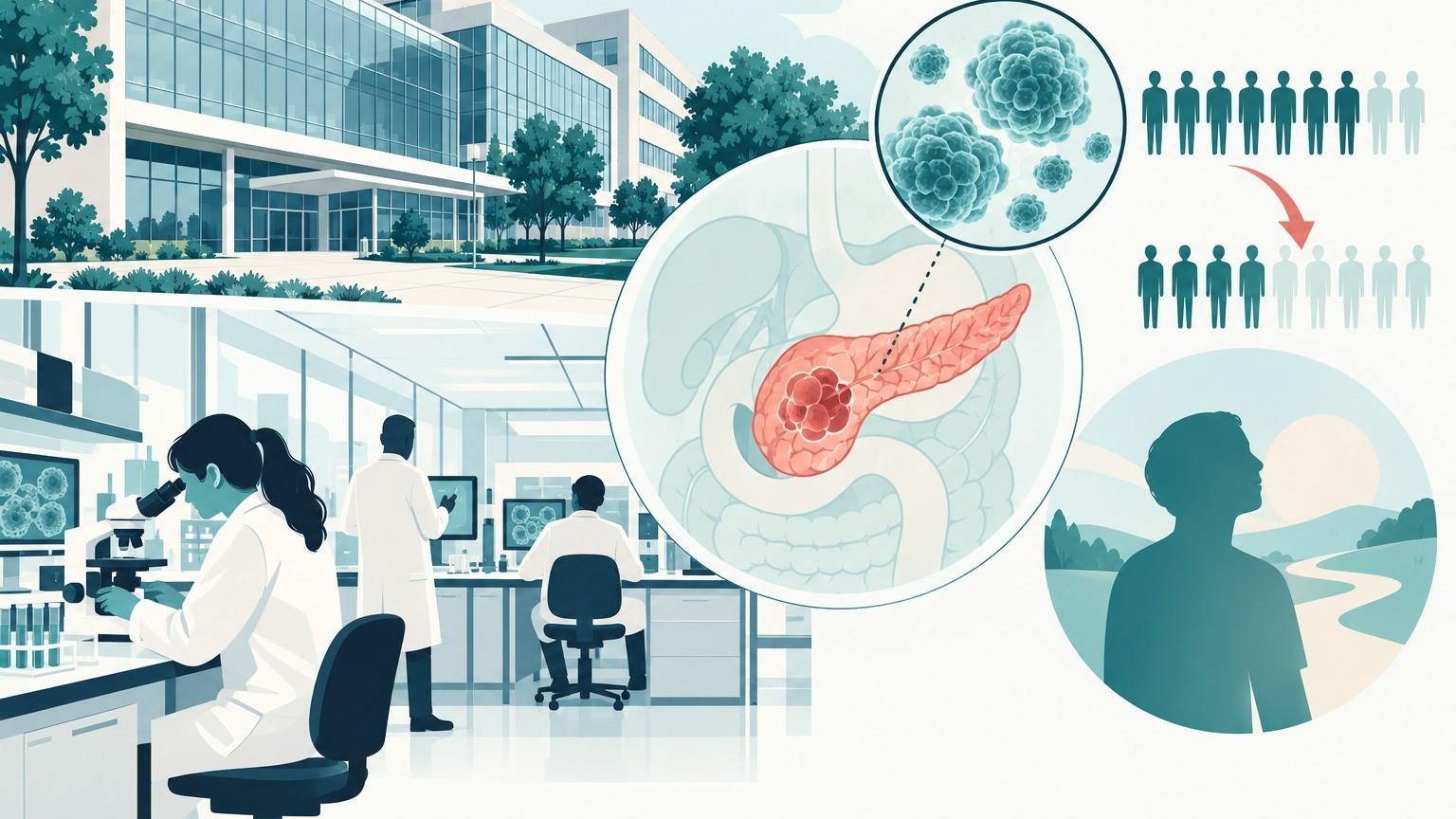
Revolution Medicines’ daraxonrasib, an oral multi-selective RAS(ON) inhibitor, reduced the risk of death by 60% compared with investigator-choice chemotherapy in the Phase 3 RASolute 302 trial of previously treated metastatic pancreatic adenocarcinoma, CASRAI reported on Friday. The randomized, open-label trial enrolled adults whose disease progressed after exactly one prior systemic line and who had an ECOG score of 0 or 1; median overall survival was 13.2 months with daraxonrasib 300 mg once daily versus 6.7 months with standard cytotoxic regimens (hazard ratio 0.40, 95% confidence interval 0.32 to 0.51; p<0.0001). Progression-free survival was a median of 7.2 months versus 3.6 months (hazard ratio 0.49, p<0.0001), and confirmed objective response rates were 30% to 32% versus 10% to 11%. Severe treatment-related side effects and drug discontinuations were less frequent with daraxonrasib than with chemotherapy; the most common daraxonrasib toxicities were mild rash, mouth sores, and diarrhea. The FDA and EMA have advanced formal regulatory reviews, with Fast Track designation supporting the agent.
In a EurekAlert! release from the 38th EORTC-NCI-AACR Symposium in Barcelona, researchers reported early-phase first-line data for daraxonrasib combined with gemcitabine and nab-paclitaxel in previously untreated metastatic pancreatic adenocarcinoma. Standard chemotherapy for untreated metastatic pancreatic cancer leads to tumour shrinkage in 23% to 42% of patients, median overall survival of about 8 to 11 months, and five-year survival of 3%, the release noted. The phase I/II RMC-GI-102 trial used 200 mg oral daraxonrasib daily with intravenous gemcitabine 1,000 mg/m2 and nab-paclitaxel 125 mg/m2 on days 1 and 15 of each cycle. By 28 September 2026, the combination had been given to 61 patients; median follow-up was 18.3 months (range, 13.1–23.7). Objective response occurred in 60.7% of patients, with complete responses in 8.2% and disease control in 90.2%; median progression-free survival reached 12.8 months, and 12-month overall survival was 76.6%. The release said the early-phase study had no chemotherapy-alone comparator. Principal investigator Dr Wungki Park said, "However, this is an early-phase study, and the results must be interpreted carefully because patients were not compared with patients receiving chemotherapy alone." The Phase 3 RASolute-303 trial is now evaluating daraxonrasib alone and together with gemcitabine plus nab-paclitaxel versus chemotherapy alone in first-line disease.
Sources: CASRAI, EurekAlert!
Corrections. Report an error to corrections@clinicalobserver.com. Read our corrections policy.