Kenya reports second Ebola death with no community spread
The health ministry says nine cases are confirmed, all within one cluster linked to the index patient, as the outbreak has now reached four African countries.
, updated . 2-minute read.
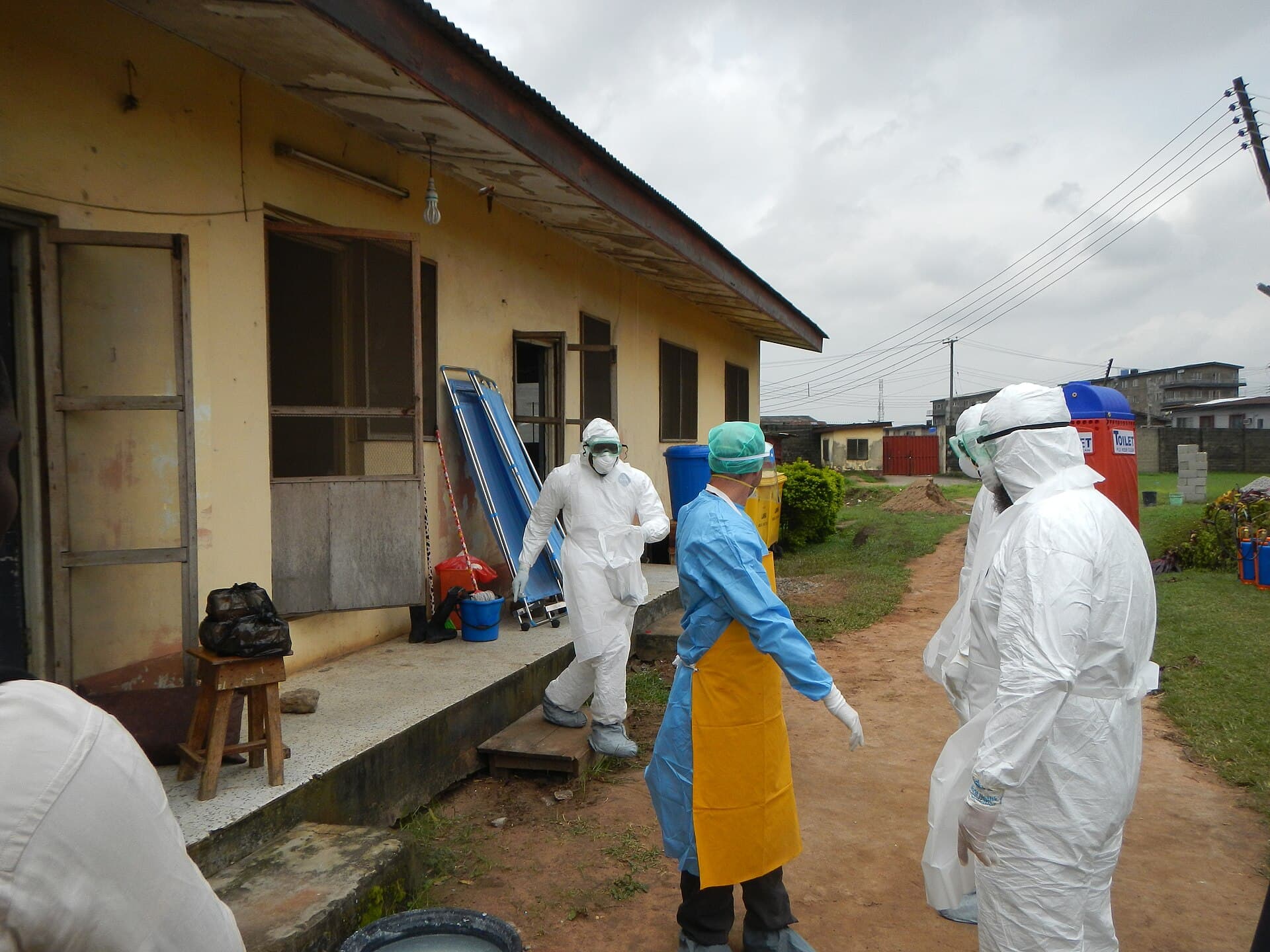
Kenya's Ministry of Health said on Friday that a 65-year-old woman died after developing Ebola symptoms while in quarantine. She was related to a Kenyan man who died from Ebola earlier in the month and had direct contact with the first identified case, according to the ministry.
With the latest death, Kenya has recorded nine confirmed Ebola cases. Two patients have died, and seven remain in care at two isolation facilities, the ministry said. All cases belong to one transmission cluster, and officials said they have seen no indication of spread in the community. The first case was identified this month in a man who came to Nairobi from the Democratic Republic of the Congo and died at a hospital in the city on October 5. Since then, authorities have traced 135 contacts and placed them all in quarantine.
The outbreak began in the DRC, which announced its seventeenth Ebola outbreak in May. Al Jazeera reported that the DRC has recorded more than 9,000 infections and more than 4,600 deaths. CIDRAP said the outbreak is the world's second-largest, with 9,668 confirmed cases and 4,649 deaths. The virus has now been reported in four countries spanning eastern, central and western Africa, giving it the widest geographic reach of any Ebola outbreak on the continent to date.
Nigeria announced its first Ebola case on Tuesday, becoming the fourth African country to report one. According to Nigeria's Federal Ministry of Health and Social Welfare, the patient is a foreign woman who began having symptoms on October 7, four days after entering Nigeria from Uganda. She was first treated for malaria at a private healthcare facility in Abuja and later tested positive for the Bundibugyo strain. Forty-four contacts are under surveillance, including healthcare workers and the woman's Swiss husband. Nigeria's health minister, Muhammad Ali Pate, said on Friday that genetic analysis showed the case was closely related to the virus found in Kenya's index patient. Reuters reported that officials had not yet determined how or where the patient was infected and that she had not travelled to the DRC.
Uganda said on Saturday that travellers who had previously been in the DRC would not be allowed to transit through the country. Uganda had recorded 20 Ebola infections and two deaths, nearly all among people who had been in the DRC, before it was declared Ebola-free in August.
Africa CDC Director-General Jean Kaseya said Ebola now affects three regions of Africa and called for "urgent action and political leadership at the highest level." He invited African ministers of health to a virtual meeting on 28 October. The WHO said countries should maintain readiness, avoid travel or trade restrictions, and strengthen surveillance at entry points. It added that investigations are ongoing to establish the Nigerian patient's full travel history. On Monday night, the U.S. State Department told Americans to reconsider visiting Kenya and increased its travel warning because of health concerns, according to Reuters.
Kenyan officials said contacts need to finish a 21-day quarantine, and the first group completes this on October 25. Reuters reported that no approved treatment or vaccine exists for the rare Ebola species causing the current outbreak.
Update, October 24, 2026
Kenya's health ministry said the 65-year-old woman who became the country's second Ebola death developed symptoms about 10 days before she died and was treated with supportive measures at an infectious disease unit in Nairobi. Clinicians “did everything possible to save her life,” but she died Friday evening; the ministry said it would arrange a safe, dignified burial with relatives.
The index patient was a 40-year-old Kenyan man living in the DRC who entered Kenya via Uganda on 3 October. A relative took him to Nairobi Hospital, where he tested positive on 5 October and died that day. Kenya announced that first case on 6 October.
Among roughly 135 contacts, 118 were quarantined; eight of them tested positive, four health workers and four close family members. Some contacts who finished the 21-day quarantine without symptoms would be released from Saturday.
Switzerland's foreign ministry told AP that the Nigerian patient, married to a Swiss diplomat, had not been in the DRC and was believed to have been infected while travelling to Uganda; her husband was symptom-free and remained isolated. The Africa CDC said the first patients in Nigeria and Kenya had both passed through Entebbe airport in Uganda on 3 October.
The US CDC announced Thursday that travelers on any international flight to the US must sign a statement affirming they had stayed out of the DRC for the prior 21 days. Those who had been there in that period would be barred from US-bound flights, including Americans.
Update, October 24, 2026
WHO's October 23 update reported that the DRC had recorded 9,704 confirmed infections and 4,687 deaths across 66 health zones in eight provinces through October 20, a crude case fatality of 48.3%. Among 482 deaths since its previous update, 307 occurred in communities and 175 in treatment centres.
A first participant received a dose in the TUMAINI trial on October 23 in Bunia, Ituri province. The Phase 2/3 adaptive platform study will test Bundibugyo vaccine candidates, starting with Ervebo; Moderna and Oxford/Serum Institute candidates are expected later. No vaccine is licensed specifically against Bundibugyo virus disease.
Kenya's health ministry said the second fatality developed symptoms on October 13 while in quarantine, according to Eye Radio citing the BBC. Eye Radio also reported that authorities tightened border screening: travellers from the DRC and nine high-risk countries, including Uganda, South Sudan, Rwanda and Tanzania, must complete a digital surveillance form before boarding and present a QR code on arrival.
Nigeria's disease control agency activated its incident management system, and the WHO said the patient developed symptoms October 7, sought care in Abuja October 11 and tested positive October 20. Health minister Muhammad Ali Pate said further tests are negative or pending.
Update, October 25, 2026
BBC News reported that the first Kenyan patient became unwell in September and received care at multiple hospitals in the Democratic Republic of the Congo before reaching Nairobi, where he died on 5 October. The seven patients still in care include three of the first victim’s relatives, three health workers and one hospital cleaner, the report said.
Kenya has also intensified checks on planes flying in from the ten listed countries and is distributing public messages that tell people to report possible cases and go to hospital, BBC News reported. The International Rescue Committee, which is working with the Congolese and Kenyan governments, said Kenya faces a steady risk of imported cases because the DRC has recorded more than 9,500 infections. Nigeria’s health minister, Muhammad Ali Pate, said investigators have yet to find any sign that the Kenyan patient went to Nigeria, with more testing under way, according to the report.
Update, October 26, 2026
Kenyan health authorities are trying to locate a Ugandan man who was listed as a contact of the country's first Ebola patient, Deutsche Welle reported, citing the Daily Nation. Kenya's director-general for health, Patrick Amoth, told the newspaper that officials know the man's name, passport number and phone number, but cannot reach him. The man had used a South Sudanese mobile number, complicating efforts to find him, according to the report. Amoth was quoted as saying: "We know him by name and passport number and from his phone but we are not able to reach him." Deutsche Welle noted that an untraced contact is not necessarily infected, but locating exposed people is essential for limiting further transmission. The report describes the missing man as an unresolved part of the contact investigation linked to the first patient, who died in Nairobi on 5 October.
Sources
- Kenya announces second Ebola death, says ‘no evidence’ of community spread, Al Jazeera
- Kenya reports second Ebola death as outbreak reaches four countries, Mezha.net
- Nigeria announces its first Ebola case in 12 years, CIDRAP
- Kenya announces 2nd Ebola death, a close relative of the first patient, Medical Xpress
- Ebola Outbreak Prompts Fresh Concern as Kenya Reports Second Death, Bold News
- Kenya records second Ebola death as outbreak continues, Eye Radio - Eye Radio Network
- Woman, 65, becomes second patient to die of Ebola in Kenya, BBC News
- Why Ebola cases in Kenya and Nigeria have cast doubt on Uganda's claims of being virus-free, Deutsche Welle
Corrections. Report an error to corrections@clinicalobserver.com. Read our corrections policy.