Three die in suspected hantavirus outbreak on Atlantic cruise ship
WHO reports two lab-confirmed and five suspected cases; operator says 149 people are aboard the MV Hondius off Cape Verde.
, updated . 3-minute read.
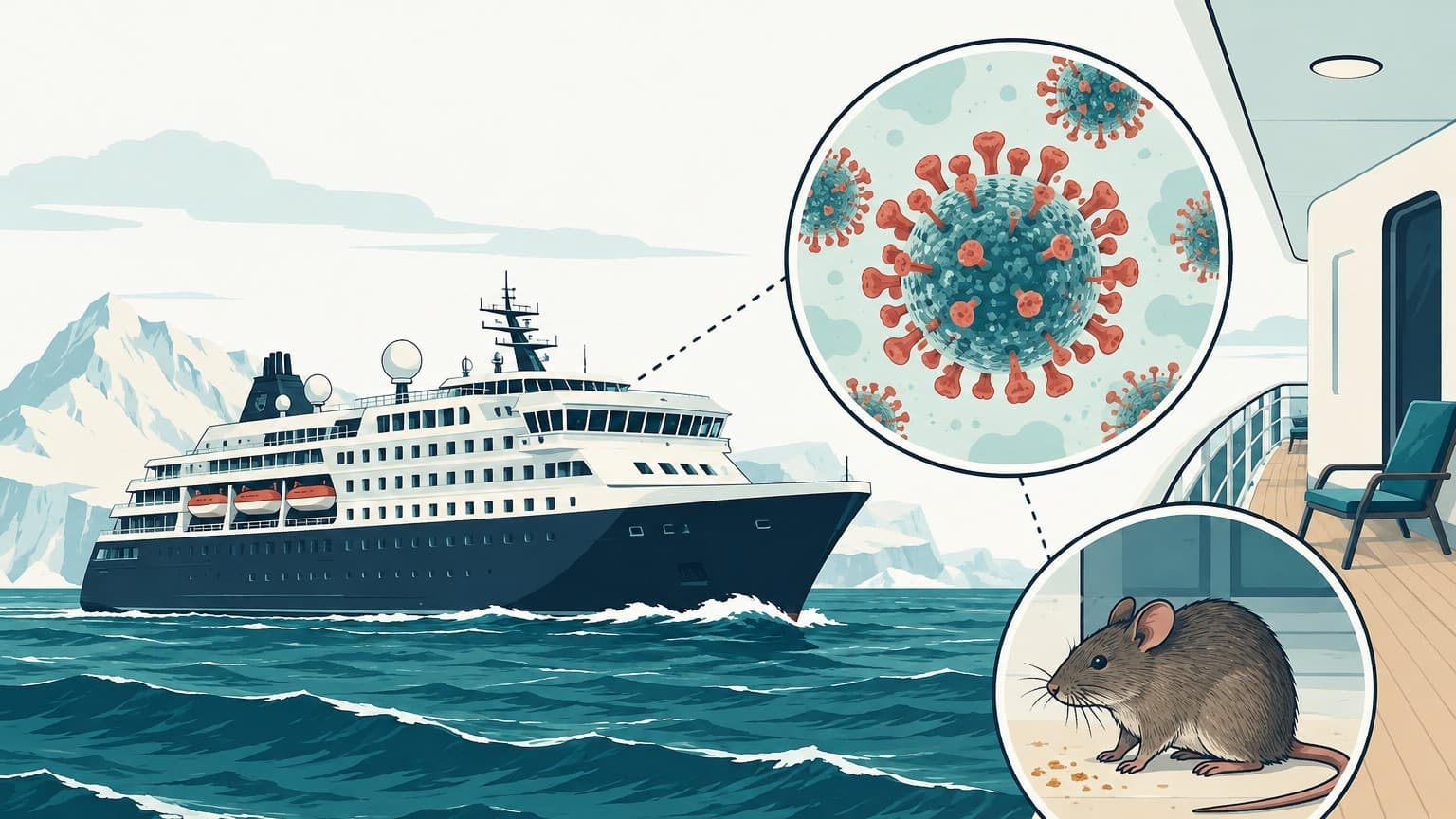
A suspected hantavirus outbreak on the Oceanwide Expeditions ship MV Hondius has killed three of seven people with confirmed or suspected infection, according to World Health Organization figures cited by ABC News. WHO said two cases are laboratory-confirmed and five are suspected; the three deaths occurred between April 11 and May 2, and one patient is in intensive care. The accounts differ: ABC News reported WHO gave two confirmed and five suspected cases, while Medical Economics reported WHO described one confirmed case, a British patient in a South African hospital, with five more under investigation.
The first two deaths were a married couple from the Netherlands, South African health officials said in a statement Monday. The husband, age 70, became ill on April 6 with fever, headache, abdominal pain and diarrhea and died on board on April 11; WHO said no microbiological test was performed. His 69-year-old wife went ashore at St Helena on April 24 with gastrointestinal symptoms, collapsed at Johannesburg O.R. Tambo International Airport on April 25 while making a connection home, and died on April 26; her laboratory test came back positive for hantavirus, WHO said.
South African health officials said a British passenger became ill while the vessel was sailing between St Helena and Ascension; his symptoms began on April 24 and he was taken by medical evacuation from Ascension to South Africa on April 27, WHO said. South African health officials said treatment at Ascension did not improve his condition, and he was taken to a private health facility in Sandton; he remains in critical condition in isolation with a positive hantavirus test. A German woman developed pneumonia symptoms starting April 28 and died May 2; Oceanwide Expeditions said the cause of death is not yet known.
Three symptomatic people with suspected hantavirus are still aboard the MV Hondius, WHO said. Oceanwide Expeditions said two crew members, one British and one Dutch, have acute respiratory symptoms, one mild and one severe requiring urgent medical care. A third person on board reports high fever and/or gastrointestinal symptoms, according to WHO. The operator said no other people with symptoms have been identified, and guests will not disembark in Cape Verde except for three medical evacuations.
Oceanwide Expeditions said a definitive disembarkation point for the remaining guests has not been finalized, and sailing to Las Palmas or Tenerife is being considered for further medical screening organized by WHO and Dutch health services. The company said strict precautionary measures are in process, including isolation, hygiene protocols and medical monitoring. WHO Director-General Tedros Ghebreysus wrote on X Sunday that the agency is arranging medical evacuation for two symptomatic passengers, carrying out a full risk assessment and providing support to affected people on board.
Hantavirus background and risks
Hantaviruses, a family of rodent-borne viruses, can cause two serious illnesses: one that attacks the lungs and one that attacks the kidneys, according to the CDC as cited by ABC News. The pulmonary syndrome is mostly found in the Americas, including the United States; the renal syndrome is mostly found in Europe and Asia. The viruses usually spread through contact with rodent urine, droppings or saliva, and human-to-human transmission is rare, suspected only for one South American subtype, WHO said.
Symptoms of the pulmonary form typically appear one to eight weeks after exposure, starting with fever, fatigue and muscle aches; about half of patients also develop chills, dizziness, nausea, vomiting, diarrhea, headache and belly pain, and late symptoms after four to ten days include coughing, shortness of breath and chest tightness as the lungs fill with fluid. The CDC puts the death rate for people who develop respiratory symptoms at about 38 percent; Medical Economics reported the pulmonary syndrome carries a fatality rate of roughly 40 percent. Symptoms of the renal form usually develop one to two weeks after exposure, and case fatality ranges from less than 1 percent to 15 percent depending on the virus.
No specific hantavirus treatment is available, and the CDC recommends supportive measures: rest, fluids and treatment of symptoms. Patients with the pulmonary form may need breathing support including intubation, and patients with the renal form may need dialysis. Medical Economics reported that WHO described the risk to the general public as low. WHO said its investigation is ongoing, including further laboratory testing, and Oceanwide Expeditions has not confirmed the cause of death for the German passenger.
Update, October 25, 2026
ABC News reported Friday that the quarantine center in Omaha, Nebraska, is preparing to house the 17 Americans from the M/V Hondius. As of Friday none of those U.S. passengers had a confirmed hantavirus infection, and several state health officials were monitoring residents who had contact with infected people. The facility is operated by Nebraska Medicine and UNMC, and it is the only U.S. quarantine unit supported with federal funds. It opened in November 2019 with 20 beds and individual negative air pressure systems. A $20 million preparedness grant from the federal Administration for Strategic Preparedness and Response financed the unit.
Dr. John Lowe, who leads the Global Center for Health Security, said officials have been coordinating since the shipboard outbreak was announced and that asymptomatic passengers would not need EMS transport; they could walk from the plane into a vehicle and then to their rooms. A quarantine period has not been defined and will be set after an epidemiological investigation upon arrival. Dr. Michael Wadman, who directs the quarantine unit, said the stay would be like a hotel room with meal delivery, daily symptom and vital-sign checks, and use of video calls and exercise equipment. Dr. Angela Hewlett, who directs the biocontainment unit, said that if symptoms develop, patients would be assessed and treated in the biocontainment unit, and she stressed that Andes hantavirus generally requires very close contact.
Sources
- 3 dead in suspected hantavirus outbreak aboard a cruise ship: What to know, ABC News
- Texas physician convicted for illegally distributing more than a million pills; semaglutide cuts heavy drinking; hantavirus kills three on Atlantic cruise ship – Morning Medical Update, Medical Economics
- What to know about Nebraska's National Quarantine Unit as it prepares to bring in hantavirus cruise ship passengers, ABC News
Corrections. Report an error to corrections@clinicalobserver.com. Read our corrections policy.