Nigeria Reports First Bundibugyo Ebola Case as Global Outbreak Tops 9,700
Authorities are tracking 53 people who had contact with the patient. The outbreak has reached 9,735 confirmed cases and is the second-largest recorded.
. 2-minute read.
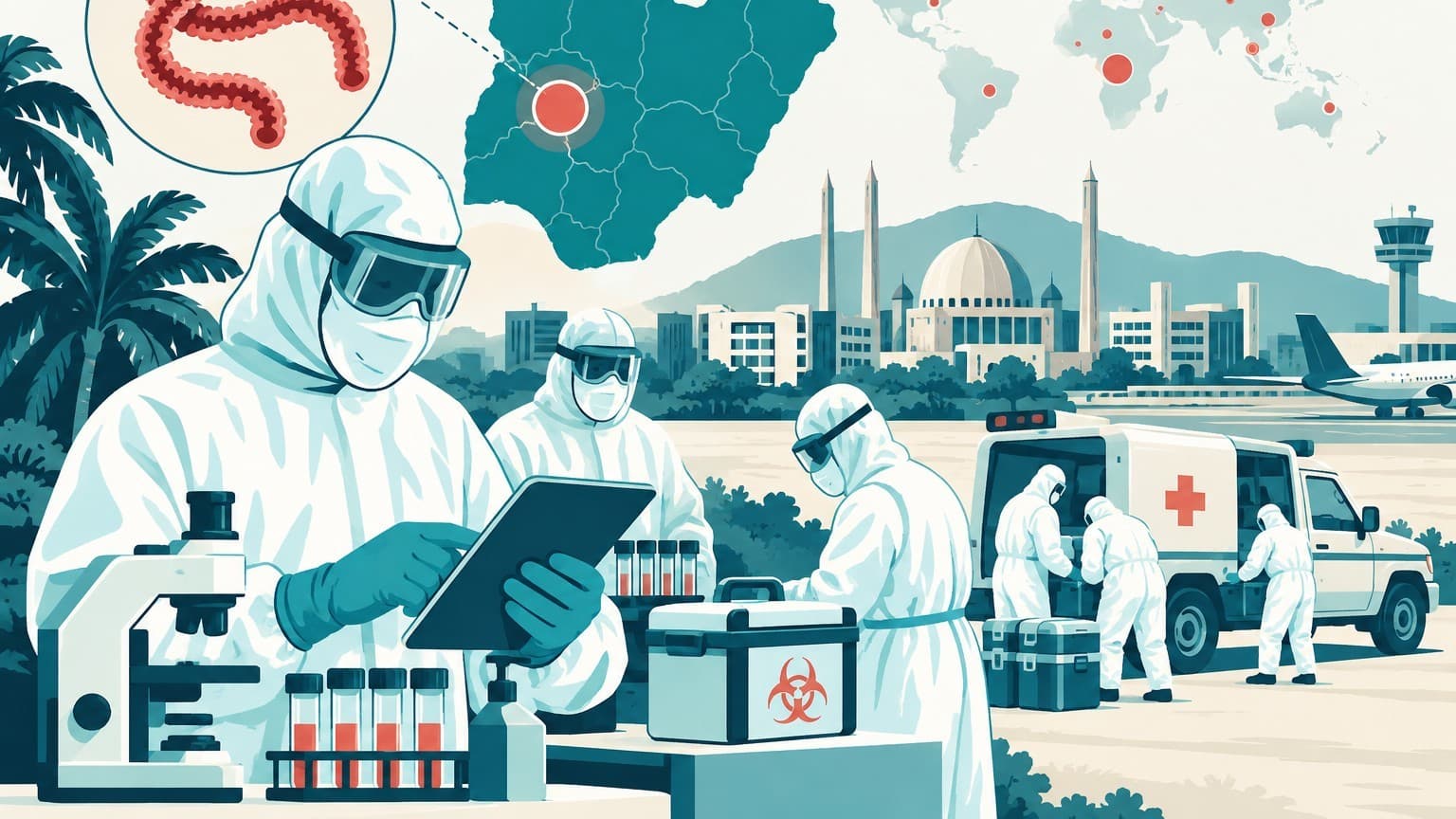
Medical Daily reported that a woman in Abuja who recently travelled from Uganda has Nigeria's first confirmed Ebola infection caused by Bundibugyo virus. The World Health Organization said Nigeria is the fifth country to confirm an infection since the Democratic Republic of the Congo declared the outbreak in May, and the first West African case.
Dr Jide Idris, director-general of the Nigeria Centre for Disease Control, said the confirmed patient remains the only laboratory-confirmed Ebola case in Nigeria. Two suspected infections were found in the Federal Capital Territory and Rivers State; the Rivers State sample tested negative. Authorities are tracking 53 people who had contact with the confirmed patient, including healthcare workers and domestic staff.
The US Centers for Disease Control and Prevention counted 9,735 confirmed cases and 4,690 confirmed deaths worldwide as of October 21. Within the DRC, 9,704 confirmed cases and 4,687 confirmed deaths have been recorded in the country's 17th Ebola outbreak. The CDC said the virus is spreading faster than earlier Ebola outbreaks, and the total is now the second-largest documented outbreak. The count passed 1,000 confirmed cases within 40 days after the response began; the 2018 DRC outbreak needed roughly 235 days to reach that mark. Kenya has recorded 9 infections and 1 death, Uganda has 20 confirmed cases and 2 deaths, and France has 1 confirmed case. South Kivu province has seen no confirmed cases since May 29.
The CDC has not confirmed any US cases tied to this outbreak and considers the threat to Americans low. People who were in the DRC during the 21 days before departure cannot board commercial flights to the United States. Americans who were in Uganda or South Sudan, but not the DRC, must pass through selected airports for extra screening.
A national incident management system is now active, bringing together the federal health ministry, the NCDC, FCT health authorities, other agencies, and technical partners. Public health workers with field experience and existing surveillance networks have been deployed. The 53 contacts will be monitored for 21 days, the maximum Ebola incubation period, and the number could change as investigations progress. Idris said a contact listing does not indicate infection; instead, health workers must evaluate and observe the person so any possible illness is detected early. About 12 laboratories across Nigeria can test for Ebola, and laboratory investigations and genetic sequencing are ongoing. Hospitals, especially in the FCT, have been ordered to improve infection prevention, and staff should start protective steps when they first see a suspected case, not after lab confirmation. Idris said: "Ebola is a serious disease, and we are handling the situation with the urgency it deserves."
Idris pointed to Nigeria's successful containment of Ebola in 2014, saying that experience strengthened public health infrastructure and staffing. He said the first goal is to trace and monitor every contact, safeguard clinicians, treat patients, and stop spread beyond the current cases. The NCDC also warned that misinformation could undermine containment and advised people to obtain information from verified sources, practise hand hygiene, and avoid contact with bodily fluids of suspected cases. The CDC named weak health systems, insecurity, attacks on health workers, scarce protective equipment, porous borders, and false information as obstacles to the response.
Sources
- Nigeria Confirms First Bundibugyo Ebola Case as Outbreak Tops 9,700 Cases, While CDC Keeps U.S. Risk Low, inkl
- Breaking: NCDC announces more confirmed, suspected cases of Ebola - Blueprint Newspapers Limited, Blueprint Newspapers Limited
- Ebola Update: DRC Outbreak Reaches 9735 Cases, Second Largest on Record, Contagion Live
Corrections. Report an error to corrections@clinicalobserver.com. Read our corrections policy.