Uganda imposes 21-day quarantine on citizens returning from DRC
International travellers from or through the DRC are barred from transiting through Uganda, while officials say the country remains free of Ebola.
, updated . 2-minute read.
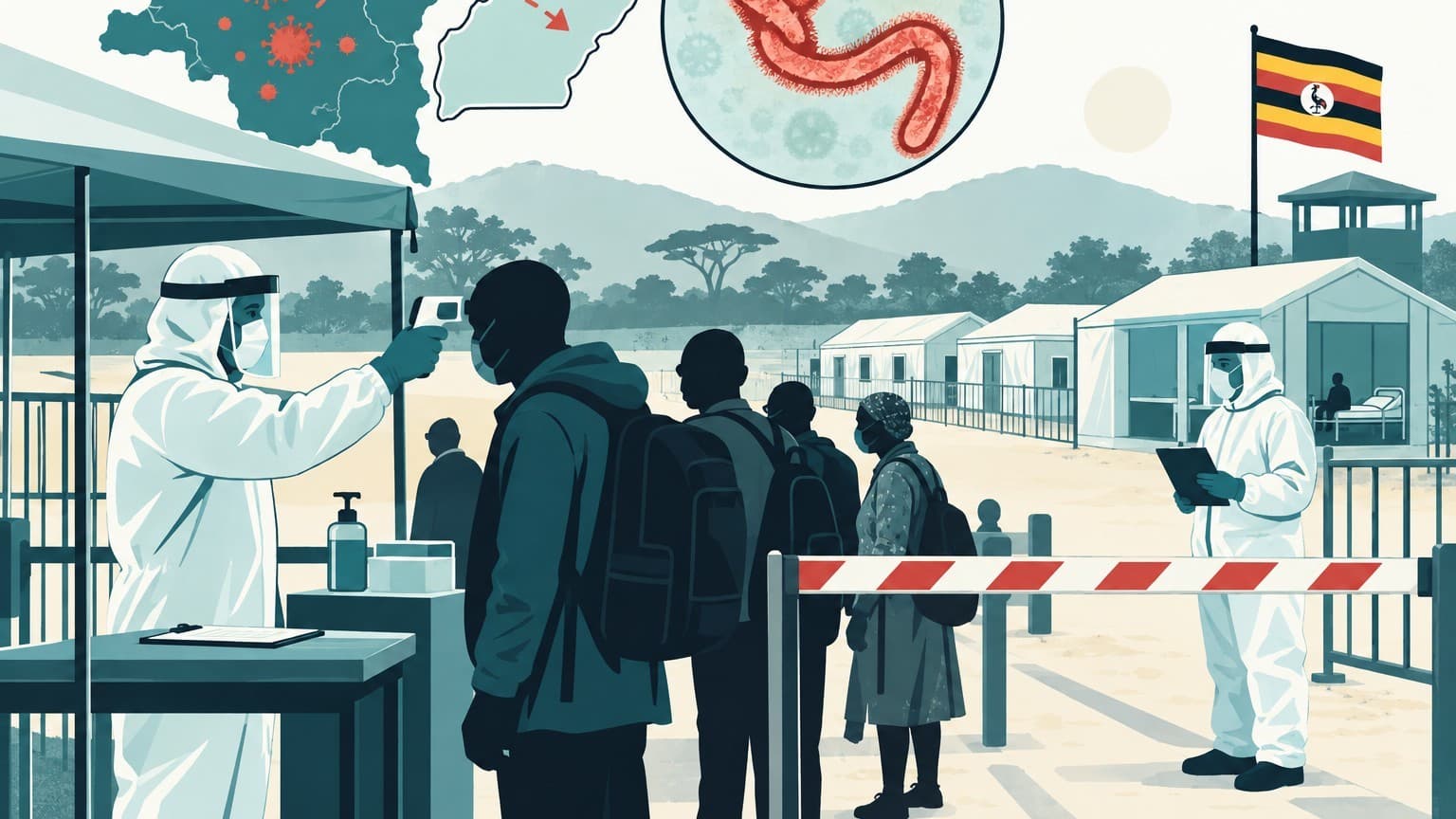
Uganda's Ministry of Health announced Sunday that citizens returning from the Democratic Republic of Congo must complete a 21-day quarantine, and that international travellers coming from or through the DRC are no longer permitted to transit through Ugandan territory. The Sunday Guardian reported that the measures came after investigations into Ebola cases found in other countries that were connected to transit through Entebbe International Airport. Health Minister Dr Chris Baryomunsi said all travellers entering Uganda by air, land, or water must complete a passenger locator form as authorities intensify screening at Entebbe and all land border crossings.
Dr Baryomunsi said Uganda has had no confirmed Ebola cases since it announced the end of the Bundibugyo virus disease outbreak on 28 July 2026. He added that surveillance in high-risk zones such as Kasese remains robust, and the border district has recorded no Ebola cases or deaths.
The regional outbreak began in the DRC and has now reached four countries in eastern, central and western Africa, which the Monitor said is the widest geographic spread of any Ebola outbreak on record. In Congo, nearly 10,000 people have been infected and more than 4,600 have died from the virus, the Monitor reported. The strain causing the current outbreak has no approved treatment or vaccine, and health officials say transmission occurs only from people with symptoms.
In neighbouring Kenya, health officials confirmed a second fatal Ebola case late Friday after a 65-year-old woman died in quarantine, the Monitor reported. She was a close relative of Kenya's first patient, who had travelled from Congo and died in a Nairobi hospital on 5 October. Kenya has traced 135 contacts, confirmed nine total cases, and is treating seven patients in isolation. The U.S. State Department raised its travel advisory for Kenya, urging Americans to reconsider travel to the country.
Uganda has traced and discharged all 60 local contacts linked to a Kenyan Ebola case after they completed 21-day monitoring without developing symptoms. Those contacts were found at border crossings, hotels, and public transport routes connected to transit through Uganda. Uganda has also set up three treatment units in eastern Congo with a total of 240 beds as cross-border medical support.
Uganda's health authorities are working with Nigerian officials and international partners on an investigation into a confirmed Ebola case in Nigeria, the Monitor reported. Genomic sequencing showed that the Nigerian patient, a woman who had recently travelled from Uganda, carried a viral strain similar to the one in Kenya's first patient, but Nigerian authorities said there is currently no evidence that the Kenyan case travelled to Nigeria or had direct contact with the patient.
Dr Emmanuel Mugisha, a senior health official, told medical correspondents in Kampala that strict quarantine and limits on transit from affected areas help monitor the incubation period and protect the population. The government warned that people attempting to evade checkpoints through unauthorized border crossings will face prosecution for violating public health statutes. The government also asked community leaders and transport operators to report suspicious travel or unconfirmed border entries to health officials.
The announcements do not indicate that Uganda has detected a local case; officials maintain the country is free of Ebola.
Update, October 25, 2026
The Nigerian case is now at the centre of a dispute between Uganda and Switzerland. The patient was the spouse of a Swiss diplomat who had been in Uganda the previous month, Tampa Free Press reported. Swiss authorities said she became infected in Uganda, but Health Minister Chris Baryomunsi called that conclusion premature and said relatives from West Nile had visited her in the Kampala suburb of Kansanga after travelling to Congo. “What evidence do they have that she never traveled there?” Baryomunsi said, adding: “We should speak science, not politics.” Health ministry secretary Diana Atwine said the Nigerian patient and Kenya’s first patient were both at Entebbe on the same date, but a security video review found no physical contact between them.
Separately, Congo has launched human trials of vaccines targeting the Bundibugyo strain as WHO counted 9,704 cases and 4,687 deaths through Oct. 20. A first volunteer received Merck & Co.’s Ervebo on Friday in Bunia; the shot is approved for the Zaire strain, and the trial is examining whether it cross-protects against Bundibugyo, with candidates from Moderna Inc. and from the University of Oxford and Serum Institute of India to be assessed soon. WHO said that in a recent 24-hour period, teams reached only about 80% of Congo’s more than 30,000 monitored contacts, below the agency’s 95% target. CEPI chief executive Richard Hatchett said Serum Institute produced more than 600,000 dose equivalents of the Oxford vaccine’s active substance in nine days, and that if the trial succeeds, “we could quickly move to having millions of doses”.
Sources
- Uganda imposes mandatory 21-day DRC quarantine as regional Ebola threat expands, Monitor
- Uganda Imposes Mandatory 21-Day Quarantine For Returning Citizens With DRC Travel History Amid Regional Ebola Concerns, The Sunday Guardian
- On High Alert: Uganda Imposes Strict Ebola Quarantine After Airport Transit Cases Emerge, Tampa Free Press
Corrections. Report an error to corrections@clinicalobserver.com. Read our corrections policy.