Kenya Searches for Missing Ugandan Ebola Contact as Cases Rise to Nine
Officials have the man's passport and phone numbers but cannot reach him, and the first cluster has grown to nine confirmed infections.
, updated . 3-minute read.
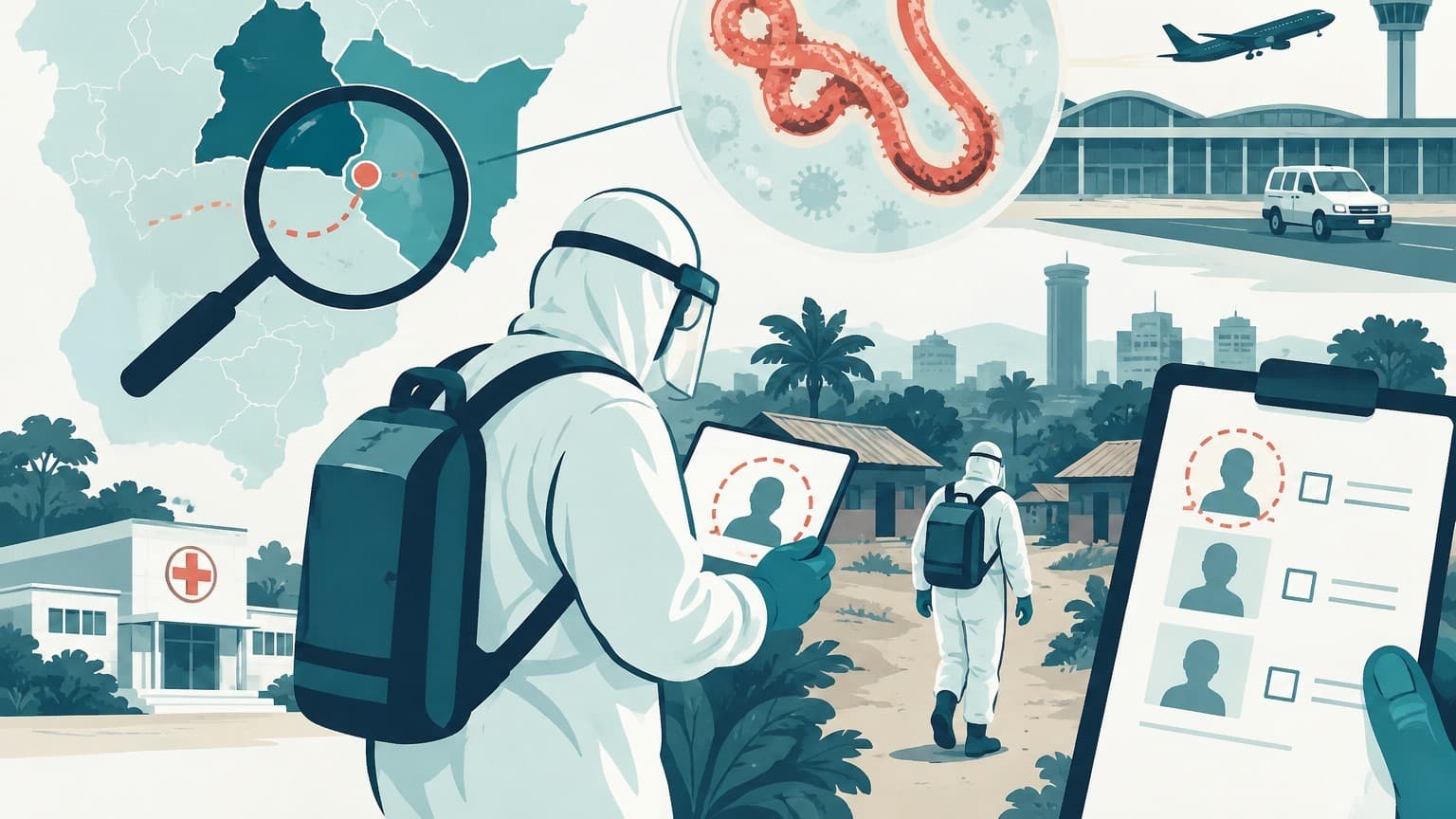
Kenyan health officials are searching for a Ugandan man who was exposed to Kenya's first Ebola patient and has since become unreachable, as confirmed infections tied to the initial Nairobi cluster increased to nine.
Patrick Amoth, Kenya's director-general of health, said the authorities have his passport and phone numbers but cannot locate him. Amoth told the Daily Nation that officials know the man's name, passport number and phone number but cannot reach him. The man appears to use a South Sudanese phone number, and there is no record he passed through Nairobi's Jomo Kenyatta International Airport or another Kenyan airport, according to the newspaper. Officials suspect he travelled by road or used an unofficial crossing to avoid screening, and Uganda has been asked to help find him.
Kenya's Ministry of Health has placed 129 contacts connected to the outbreak under monitoring. A ninth infection was announced on Tuesday evening and remains epidemiologically linked to the first group of cases; that patient has been isolated. The Daily Nation reported that one person from a list of 130 remained unaccounted for; another contact, initially missing, had been traced and quarantined at Moi Teaching and Referral Hospital in Eldoret.
Kenya's first case was confirmed on 6 October in a Kenyan who had been living in the Democratic Republic of Congo. He arrived in Nairobi on 3 October after travelling through Uganda and died on 5 October. A 49-year-old attendant who had looked after him later tested positive while in quarantine, according to figures provided by health officials.
The cluster involves the Bundibugyo strain of Ebola virus, for which there is no approved specific vaccine or treatment. The same strain is responsible for an outbreak in the eastern DRC that was declared in May and has affected more than 9,500 people, with at least 4,600 deaths.
Kenyan authorities have screened more than 667,000 travellers at 26 entry points and deployed mobile laboratories at the Lwakhakha and Busia border posts. The Ministry of Health says the risk to the general public remains low and there is no evidence of community transmission; travel, trade and public gatherings have not been restricted. Transmission occurs through direct contact with blood or other body fluids from someone who is infected or has died, not through the air.
Kenya's handling of isolation and quarantine facilities has drawn criticism from politicians and health professionals. Former Chief Justice David Maraga, a candidate in the 2027 presidential election, said quarantine centres were becoming places where Ebola could incubate. On Tuesday, the doctors' union joined the national Ebola response task force after days of pressure.
The United States State Department earlier raised its travel advisory for Kenya and told Americans to reconsider travel because of health risks tied to the outbreak. Nigeria confirmed its first case on Tuesday: a woman who had recently arrived from Uganda tested positive in Abuja, and 44 contacts were identified. Tests later confirmed the Bundibugyo strain in that patient. Uganda had reported 20 cases and two deaths before saying its outbreak had ended in late August. The Africa CDC has described the regional situation as an 'extremely serious threat' and its director-general called for stronger international mobilisation. France confirmed an infection in June in a doctor returning from the DRC; the patient recovered, making France the only country outside Africa with a confirmed case tied to this outbreak.
Clinical trials of candidate vaccines have shown encouraging indications, and the WHO expects a first trial of a candidate vaccine for the current Bundibugyo outbreak to begin before the end of October.
Update, October 24, 2026
New information places Kenya's first confirmed Ebola patient and Nigeria's first confirmed patient at Uganda's Entebbe International Airport on the same day. Wessam Mankoula, who leads emergency preparedness at the Africa Centres for Disease Control and Prevention, said both patients are known to have passed through Entebbe on 3 October, and investigators are examining whether they were there at the same time or whether any transmission occurred at the airport. Kenya's first patient, who later died in Nairobi, has now been confirmed to have travelled through Entebbe that day, the same day as the Nigerian woman.
Uganda's Health Ministry said initial findings indicate the Nigerian patient went to eastern Democratic Republic of Congo for business and passed through Uganda without symptoms on her return, adding that transit through Uganda does not by itself establish infection there. Switzerland's Federal Department of Foreign Affairs disputed that account, stating that the woman, who holds Swiss citizenship and is of Ugandan origin, is married to a Swiss diplomat posted in Abuja; the department said she and her husband did not travel to the DRC. The Swiss government told Reuters that it thinks she acquired Ebola while on a trip with her husband in Uganda, but that has not been independently verified. The WHO and Africa CDC said on Thursday they had not been given confirmed details showing that she had visited the DRC.
The Nigerian patient first showed symptoms on 7 October; she sought care at a private clinic on 11 October and was later isolated. The Africa CDC said it would hold a special virtual session of national health officials on 28 October.
Sources
- “We Have His Passport And Phone Numbers But Cannot Locate Him” — Kenya Searches For Ugandan Ebola Contact As Cases Rise To Nine, TheNigeriaLawyer
- Kenya searches for missing Ugandan contact as Ebola cases rise, inkl
- Kenya Searches For Missing Ugandan Linked To First Ebola Case, Trending News
- Ebola cases in Kenya and Nigeria raise concern in Uganda, The Eastleigh Voice
Corrections. Report an error to corrections@clinicalobserver.com. Read our corrections policy.