Swiss national is first Ebola Bundibugyo case in Nigeria
The 42-year-old woman travelled from Uganda to Abuja and tested positive on October 20. Forty-four contacts have been identified, mostly health workers.
, updated . 2-minute read.
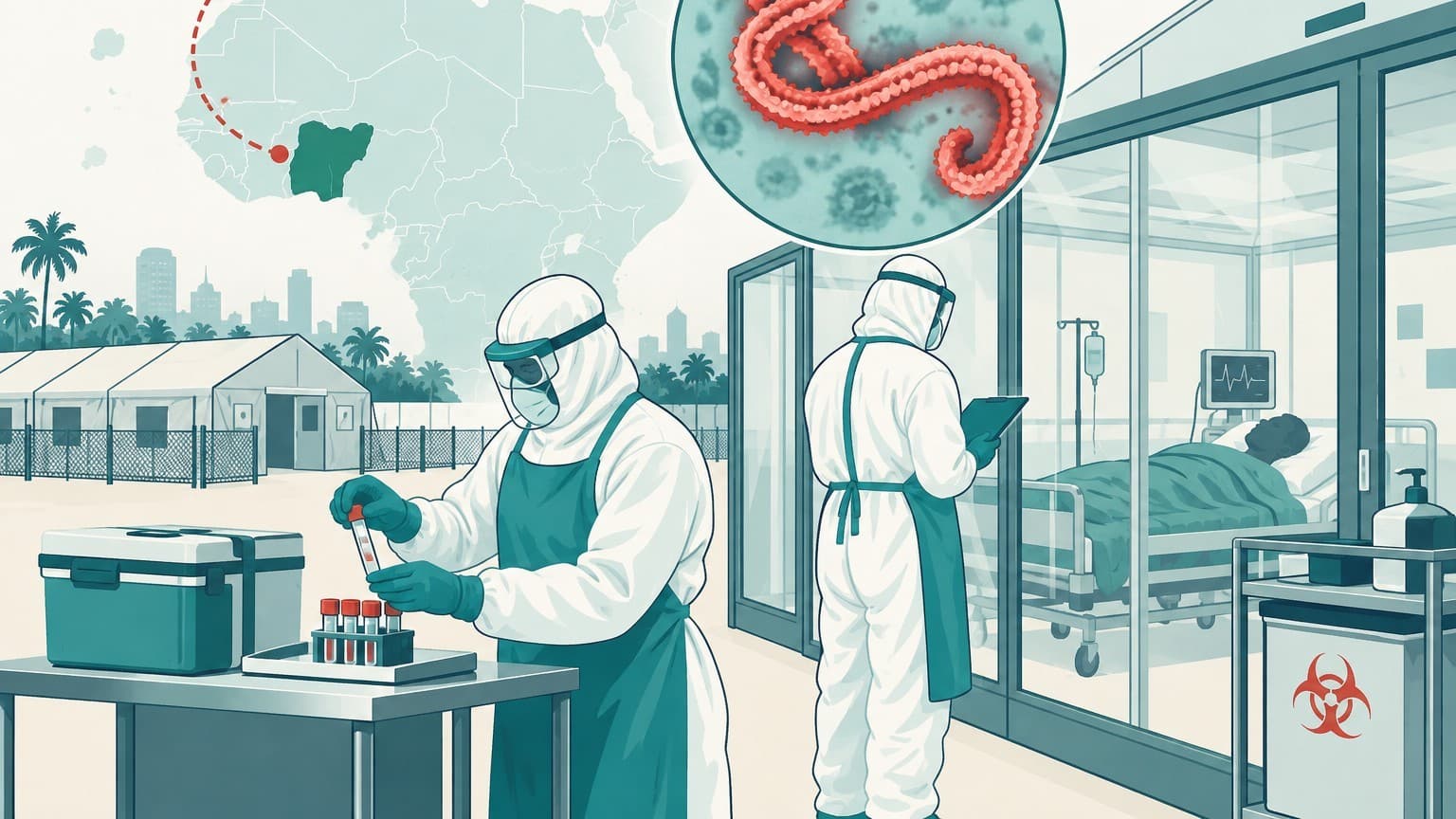
Nigerian health officials have confirmed the country's first case of Ebola Bundibugyo, identifying the patient as a Ugandan-born Swiss national who had not recently visited the Democratic Republic of Congo, Swiss and Nigerian authorities said. The 42-year-old woman travelled from Uganda to Abuja on October 3 and was first incorrectly diagnosed with malaria before she tested positive for Ebola on October 20.
The Nigeria Centre for Disease Control and Prevention said the woman was tested on October 19 after officials learned she had recently been in Uganda. All three molecular tests identified the Bundibugyo strain, for which there is no vaccine or specific treatment, according to NCDC public health laboratory service director Olajumoke Babatunde. The World Health Organization also confirmed the strain. The Swiss government said the infection may have occurred during a trip to Uganda approximately two weeks ago. Her husband, an employee at the Swiss embassy in Uganda, remains asymptomatic and in quarantine.
Uganda's health ministry responded that the country has no confirmed active Ebola cases and that travel through Uganda does not establish infection there. The location of exposure remains under investigation, the ministry said. Africa Centres for Disease Control and Prevention Director-General Jean Kaseya said the patient was born in Uganda and urged her to disclose travel details. "What we want is collaboration from this lady," Kaseya said.
The patient is hospitalized and receiving treatment. An unnamed official told AFP that her condition had deteriorated into multi-organ failure. Nigerian authorities have identified 44 contacts, most of them healthcare workers, including the patient's husband. Officials are tracing passengers who travelled with her but do not believe she was symptomatic during the flight.
The DRC outbreak has recorded 9,066 confirmed cases and 4,381 deaths as of mid-October, making it the deadliest on record there. Cases have been identified in the DRC, Uganda, Kenya, France, and now Nigeria. Kenya has reported nine cases since October 6, according to the World Health Organization. Nigeria's health minister, Muhammad Ali Pate, said the priority is to contain the single case and prevent community transmission. "We currently have one confirmed case, and our priority is to contain it and prevent transmission into communities or a wider outbreak," he said.
In 2014, Nigeria's first Ebola case, detected in Lagos, led to 20 infections and eight deaths before being brought under control within three months. The current DRC outbreak, identified as a public health emergency in May, has been concentrated in Ituri province, where militia violence and distrust of aid workers have complicated response efforts.
Update, October 25, 2026
Swiss authorities confirmed on Friday that the patient is responding to treatment and that they are considering repatriating her for further care, Breitbart reported. The report also said she had initially been treated for other diseases without success before being tested for Ebola.
Africa CDC Director-General Jean Kaseya said on Thursday that countries should avoid disputes and share information, and that it remains unclear whether she was infected in Uganda, Kampala, or somewhere else. He said the woman, born in Uganda, spent some days there and her husband flew to join her. The Swiss statement also said the husband was with her on the trip during which she is thought to have caught the virus.
WHO Director-General Tedros Adhanom Ghebreyesus has suggested the virus may have been spreading undetected in Ituri since January, according to Breitbart. The report adds that in DRC, Sierra Leone and Liberia, some residents feared health workers were deliberately killing patients, and some in DRC attacked treatment centres. Information Minister Mohammed Idris instructed agencies to give communities, in every language, clear facts on how the disease spreads, how to stay safe and where to report suspected cases.
Sources
Corrections. Report an error to corrections@clinicalobserver.com. Read our corrections policy.